


Shrimp farming is becoming increasingly dependent on reliable feed production. For farms that purchase large quantities of feed every season, establishing an in-house production system can provide greater control over formulation, pellet size, production scheduling, and feed availability. However, the investment required for a new production project varies considerably from one factory to another.
When evaluating shrimp feed production machine price, buyers should therefore look beyond the price of the main pelletizing equipment. The actual project budget can include raw material preparation, grinding, mixing, pelletizing, cooling, screening, conveying, packaging, electrical systems, installation, and factory infrastructure.
Understanding these factors before purchasing equipment makes it easier to develop a realistic investment plan.
Why Does Production Capacity Matter?
Capacity is one of the most important factors affecting the overall investment.
A small shrimp farm producing feed for its own ponds may only need a compact processing system. A commercial feed manufacturer supplying multiple farms will require a much larger production line and greater storage capacity.
However, a higher-capacity machine does not automatically mean a better investment. If raw material supply and market demand are insufficient, an oversized system may remain underutilized.
A practical approach is to calculate current daily feed consumption first. The factory can then determine how many working hours are available each day and select equipment with enough capacity to meet demand while leaving some operating flexibility.
Future expansion should also be considered. A growing shrimp farm may initially require a small production line but could need significantly more feed capacity after expanding pond area or stocking levels.
What Raw Materials Are Used?
The formulation has a major influence on both processing requirements and production costs.
Typical shrimp feed ingredients may include fish meal, soybean meal, wheat flour, rice bran, fish oil, vegetable protein sources, vitamins, minerals, amino acids, and other functional additives.
Each ingredient has different nutritional and physical characteristics.
For example, fish meal provides concentrated protein, while starch-containing ingredients can contribute to pellet binding. Oil improves energy density but may affect pellet formation when included at high levels.
Because shrimp feed formulas can be relatively complex, the factory needs accurate batching and thorough mixing.
The cost of raw materials should therefore be evaluated alongside the machinery investment. In many commercial feed businesses, ingredient costs account for a much larger portion of operating expenses than equipment depreciation.
How Does Grinding Affect the Process?
Raw material particle size directly affects mixing and pellet formation.
Large particles can create inconsistent feed structure, while appropriately ground ingredients can produce a more uniform mixture.
A hammer mill is commonly installed before the mixing section to reduce particle size. The screen size should be selected according to the formulation and final pellet specifications.
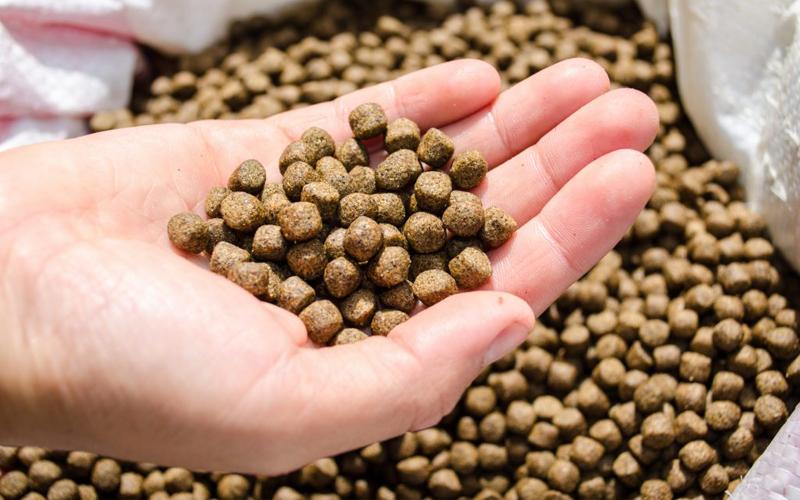
Fine grinding may also improve the physical quality of small shrimp feed pellets.
However, grinding consumes electricity, so the factory should balance particle size requirements with energy consumption.
What Role Does Mixing Play?
A consistent formula requires uniform distribution of ingredients.
The mixer combines protein sources, grains, binders, minerals, vitamins, oils, and other ingredients into a relatively homogeneous mixture.
Poor mixing can cause nutritional differences between individual pellets, particularly when small quantities of additives are included.
For commercial production, automated batching and weighing systems can improve formulation accuracy and reduce manual operation.
The size of the mixer should also match the production capacity. An undersized mixer may restrict the output of a larger pelletizing system.
How Does Pelletizing Influence Investment?
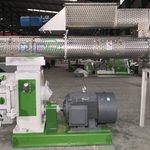
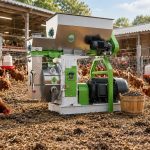
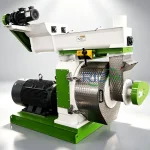
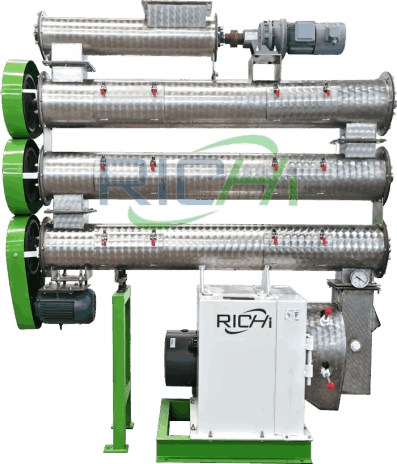
The pellet mill is the central processing machine for conventional sinking shrimp feed.
During pelletizing, prepared material is compressed between rollers and a die. The material passes through die holes and is cut into pellets at the outlet.
The die specification determines pellet diameter, while the cutter determines approximate pellet length.
A factory producing several shrimp feed sizes may require multiple dies. Frequent product changes should also be considered when selecting the machine because they can influence production efficiency.
For a small operation, a simpler pelletizing system may be sufficient. Commercial factories may require automated feeding, centralized controls, multiple pelletizing units, and larger downstream equipment.
Is Extrusion a Better Choice?
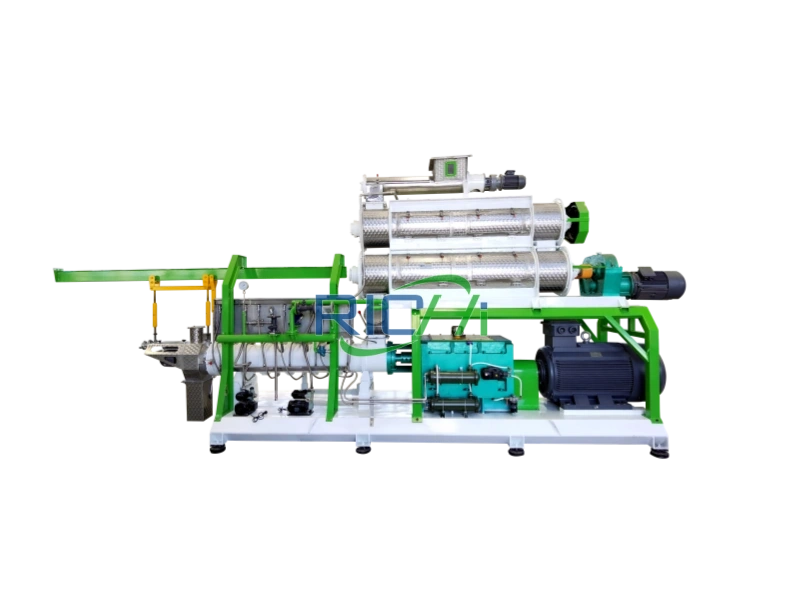
Extrusion is another technology used in aquatic feed production, but it serves somewhat different purposes.
For example, floating fish feed extruder 500kg per hour equipment may be suitable for producers making floating fish feed at a smaller scale. Extrusion can control expansion and density, allowing manufacturers to create floating products.
Shrimp feed, however, is generally designed to sink. Conventional pelletizing can therefore be a practical solution when the target product requires sinking characteristics rather than floating expansion.
The appropriate technology depends on the final product, formulation, required density, and production scale.
Why Are Cooling and Screening Important?
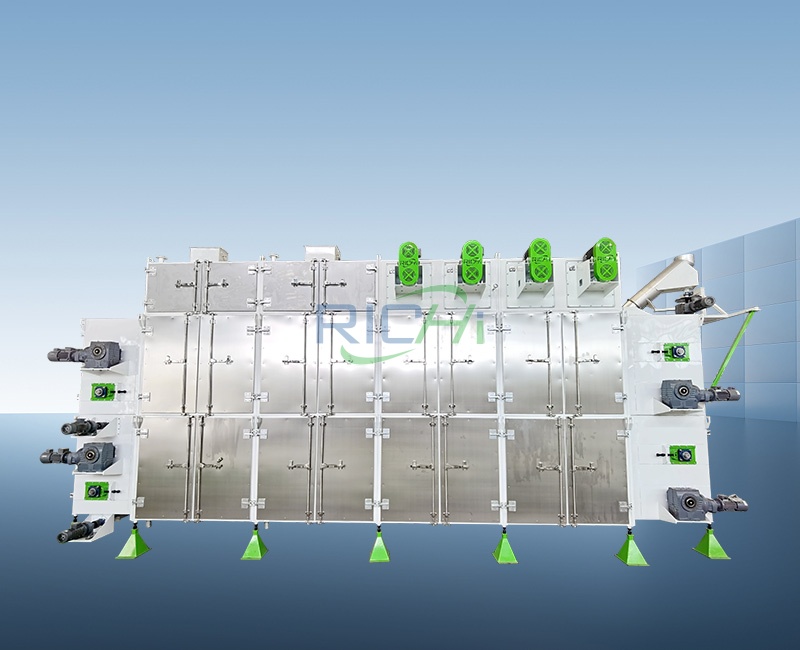
Pellets leaving the pellet mill are relatively warm and may contain moisture that needs to be controlled.
A cooler reduces pellet temperature and improves handling characteristics. Screening then separates qualified pellets from fines and oversized particles.
Fines can often be recycled into production, improving material utilization.
These auxiliary machines must be matched to the pellet mill. If the cooler is too small, the entire production line can become restricted even when the pellet mill has sufficient capacity.
For this reason, the quotation for a complete project should specify not only the main pellet machine but also the capacity of the supporting equipment.
What About Packaging?
Packaging requirements depend on the intended market.
A shrimp farm producing feed for internal use may choose bulk storage or simple bagging. A commercial feed manufacturer selling products to distributors may require automatic weighing and packing equipment.
Common packaging sizes vary according to market requirements. Larger bags can reduce packaging labor, while smaller bags may be more convenient for retail distribution.
Automatic packaging systems can increase the initial investment but reduce manual labor and improve weighing consistency.
How Should Buyers Compare Different Quotations?
A low equipment quotation may not represent the lowest total project cost.
One supplier may quote only the main pellet machine, while another may provide the pellet mill together with grinding, mixing, cooling, screening, conveying, and packaging equipment.
Therefore, quotations should be compared based on the complete production scope.
Buyers should check motor power, expected output, die specifications, control system, auxiliary equipment, installation, commissioning, spare parts, and after-sales support.
An experienced Richi Pelletizer manufacturer can also help evaluate the production process and determine which equipment is essential and which options can be added later.
Can a Factory Start Small?
Yes. A phased investment strategy can be practical for farms with limited initial demand.
The first stage can focus on essential equipment for raw material preparation, mixing, pelletizing, cooling, and screening.
As production increases, the factory can add automatic batching, larger storage systems, improved packaging equipment, or additional pellet mills.
The factory layout should be planned with this expansion in mind. Leaving sufficient space for future equipment can reduce reconstruction costs later.
Electrical capacity, material flow, warehouse access, and finished-product storage should also be considered during the initial design.
What Is the Most Important Cost Consideration?
The most important consideration is not the price of one machine but the relationship between investment and actual production demand.
A factory should avoid purchasing equipment that is too small to meet demand, but it should also avoid investing heavily in unused capacity.
Raw material costs, electricity consumption, labor, maintenance, spare parts, packaging, and equipment utilization all contribute to long-term production economics.
A reliable production line should provide stable operation while allowing the manufacturer to adjust feed formulas and pellet sizes as market requirements change.
Before making a final decision, buyers can read more about feed processing equipment, production line design, and different approaches to aquatic feed manufacturing.
Final Thoughts
Shrimp feed equipment investment depends on much more than the price of the pellet mill itself. Capacity, raw materials, grinding, mixing, pellet specifications, cooling, screening, packaging, automation, and future expansion all influence the total project cost.
For a small or medium-sized shrimp feed factory, selecting equipment according to actual demand is usually more practical than simply choosing the largest available machine.
A properly designed production system can provide consistent pellet quality, efficient material handling, and greater control over feed production. By evaluating the complete process before purchasing equipment, producers can build a system that fits both their current requirements and future development plans.
Related post:https://pelletizerequipment.com/dry-type-fish-feed-extruder/