

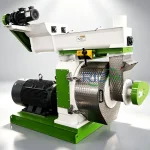


Moisture is one of the most important factors affecting wood drying results. Whether the raw material is sawdust, wood chips, wood shavings, bark, or other wood residues, its initial moisture content has a direct influence on drying time, energy consumption, dryer capacity, final moisture uniformity, and downstream processing performance.
For wood pellet production, moisture control is particularly important. A pellet mill requires raw materials with suitable and relatively stable moisture conditions. If sawdust is too wet, pelletizing may become unstable and energy consumption may increase. If the material is excessively dry, pellet formation and binding can also be affected.
For small and medium-sized biomass processing projects, a small sawdust dryer can provide a practical way to control the moisture of sawdust before pelletizing or other processing. However, simply choosing a dryer is not enough. The drying system must be matched to the initial moisture content, target moisture, material characteristics, and required capacity.
Understanding the relationship between moisture and drying results can help manufacturers design more efficient wood processing systems and achieve more consistent finished products.
What Is Wood Moisture?
Wood moisture refers to the amount of water contained in wood materials. Depending on the raw material and how moisture is measured, moisture can be expressed in different ways.
In practical biomass processing, manufacturers usually focus on the moisture content of the material entering and leaving the drying system.
Sawdust from different sources can have very different moisture levels. For example, residues from freshly processed logs may contain considerably more moisture than dry sawdust produced during furniture manufacturing.
Moisture can also change during storage.
Outdoor storage may expose sawdust to rain and humid air. Even when no direct rainfall occurs, biomass can absorb moisture from the surrounding environment.
Therefore, the moisture content of wood residues is rarely completely constant.
Why Initial Moisture Matters
Initial moisture is the moisture content of the raw material before it enters the dryer.
It is one of the most important parameters used to determine drying requirements.
Consider two batches of sawdust processed at the same production rate. One batch contains relatively low moisture, while the other contains much more water. The second batch requires the dryer to remove more water before the material reaches the same final moisture level.
This means the required drying load increases as initial moisture increases.
The difference can affect:
- Drying time
- Heat consumption
- Dryer capacity
- Hot-air requirements
- Exhaust volume
- Fuel consumption
- Material residence time
- Final moisture uniformity
For this reason, dryer selection should always consider the actual moisture of the raw material.
Initial Moisture and Water Evaporation
A dryer does not simply process tons of wood. It also removes a certain amount of water from those tons of material.
This distinction is important when calculating drying capacity.
Suppose a plant receives a fixed amount of wet sawdust every hour. If the initial moisture is relatively low, the dryer may only need to remove a moderate amount of water.
If the initial moisture increases significantly, the amount of water that must be evaporated also increases.
Therefore, a dryer rated only according to tons per hour does not provide enough information for proper system selection.
A professional drying calculation should consider:
Wet material throughput + initial moisture + target moisture + required water evaporation
This is particularly important when selecting a small sawdust dryer, because smaller systems usually have limited heating and evaporation capacity.
How High Moisture Affects Drying Time
High initial moisture generally increases the amount of water that must be removed.
As a result, the material may require longer residence time in the dryer or greater drying intensity.
If the dryer is operated beyond its intended capacity, the material may leave the dryer before reaching the desired moisture level.
This can create an unstable process.
For example, if a small dryer is designed for a certain moisture range but the incoming sawdust becomes significantly wetter, the same feed rate may no longer produce the required final moisture.
The operator may need to reduce the feed rate, increase available heat within safe operating limits, or adjust airflow and residence time.
Moisture Affects Energy Consumption
Drying is normally one of the more energy-intensive stages of biomass processing.
The more water that must be removed, the more heat is generally required.
This is why raw material moisture has a direct relationship with energy consumption.
When wet sawdust enters a dryer, part of the supplied thermal energy is used to evaporate water. If the initial moisture is much higher than expected, the energy demand can increase significantly.
Therefore, maintaining reasonable control over raw material moisture before drying can improve overall energy efficiency.
However, this does not mean that operators should avoid wet raw materials altogether. Many pellet plants intentionally process wood residues with different moisture levels. The key is to design the drying system according to the actual moisture range.
Moisture and Dryer Capacity
Dryer capacity is not a single fixed number.
The actual output of a dryer depends on several conditions, including:
- Initial moisture
- Final moisture
- Material type
- Particle size
- Bulk density
- Heat source
- Hot-air temperature
- Airflow
- Residence time
- Dryer design
A dryer that can process a certain amount of relatively dry sawdust may not be able to process the same amount of much wetter material while achieving the same final moisture.
This principle is especially important when selecting a small sawdust dryer for a low-capacity pellet plant, farm-based biomass project, or small wood processing facility.
The equipment should be selected based on actual drying requirements rather than nominal capacity alone.
How Moisture Affects Final Drying Quality
Drying quality is not only about reaching the correct average moisture content.
Uniformity is also important.
Imagine a batch of sawdust that leaves the dryer with an average moisture content that appears acceptable. Some particles may still be relatively wet while others are excessively dry.
This uneven moisture distribution can create problems in downstream processing.
When the material enters a pellet mill, wetter particles and drier particles may behave differently under compression.
This can lead to inconsistent pellet formation.
Therefore, a good drying process should aim for both:
Suitable final moisture + uniform moisture distribution
Why Moisture Uniformity Matters for Pelletizing
Wood pellet production is a continuous process. The pellet mill performs best when raw material characteristics remain relatively stable.
If moisture fluctuates significantly, pelletizing conditions may also change.
High-moisture material may become difficult to compress efficiently, while excessively dry material may not bind as effectively.
Moisture variation can therefore affect:
- Pellet density
- Pellet durability
- Pellet surface quality
- Pellet mill throughput
- Energy consumption
- Fines generation
A well-controlled drying system helps reduce these fluctuations.
Moisture and Wood Particle Size
Particle size affects how quickly moisture moves through wood material.
Fine sawdust has a relatively large surface area, which can make surface moisture evaporate rapidly.
Larger wood chips have a different drying behavior because moisture inside the particles must travel toward the surface before it can evaporate.
This means the same drying conditions cannot always be applied to different raw materials.
A small sawdust dryer designed for fine sawdust may not provide the same performance when processing large wood chips without appropriate adjustments.
For this reason, raw material preparation should be considered before dryer selection.
The Relationship Between Moisture and Bulk Density
Bulk density also affects drying.
Sawdust is a loose material, but its bulk density can vary depending on particle size, wood species, moisture content, and processing method.
Wet material may behave differently from dry material during feeding and conveying.
If the bulk density changes significantly, the mass of material entering the dryer at a given volumetric feed rate can also change.
Therefore, feeding systems should be designed to provide stable material flow.
Stable feeding is particularly important for smaller drying systems because sudden increases in material flow can quickly reduce drying performance.
Moisture Affects Heat Transfer
Drying depends on effective heat transfer between the hot air and the wood material.
When moisture is high, a large amount of heat is consumed in water evaporation.
The material temperature may remain relatively low during active moisture removal because much of the available energy is used to change water from liquid to vapor.
As the material becomes drier, the drying behavior changes.
Therefore, the relationship between air temperature, material temperature, airflow, and moisture must be properly controlled.
Simply increasing hot-air temperature does not always produce proportionally better results.
Why Higher Temperature Is Not Always Better
One common misconception is that drying can always be improved by increasing temperature.
Higher temperature can increase the rate of heat transfer, but it also increases energy demand and may create undesirable operating conditions.
The correct drying temperature depends on:
- Raw material type
- Initial moisture
- Particle size
- Dryer structure
- Airflow
- Residence time
- Heat source
- Target moisture
The objective is controlled moisture removal, not maximum temperature.
A properly designed small sawdust dryer should provide stable and controllable drying conditions rather than relying on excessive heat.
Moisture and Residence Time
Residence time refers to how long the material remains inside the drying system.
Wet sawdust generally requires enough residence time for heat to transfer into the material and for water to evaporate.
If the residence time is too short, the material may leave the dryer with excessive moisture.
If it is unnecessarily long, energy may be wasted and the material may become too dry.
Residence time is influenced by:
- Dryer length
- Drum speed
- Material feed rate
- Airflow
- Internal structure
- Particle size
- Material moisture
These factors must be considered together.
Moisture and Airflow
Airflow plays an important role in drying because it carries heat to the material and removes moisture vapor from the drying system.
If airflow is insufficient, moisture removal may become slower.
If airflow is excessive, energy consumption and dust-handling requirements may increase.
Proper airflow distribution is therefore important.
For fine sawdust, airflow design is especially important because lightweight particles can be carried by the air stream.
A well-designed dust collection system should work together with the drying and exhaust system.
Moisture and Heat Source Stability
A stable heat source is essential for consistent drying.
If the heat supply fluctuates, the drying temperature and evaporation rate may also fluctuate.
This can result in inconsistent final moisture.
For example, if the heat source temporarily supplies insufficient heat, wet material may pass through the dryer without adequate moisture removal.
Biomass drying systems may use different heat sources depending on local conditions.
Possible options include:
- Biomass fuel
- Natural gas
- Diesel
- Other thermal energy systems
- Recovered heat
The appropriate choice depends on fuel availability, operating cost, environmental requirements, and project scale.
How Moisture Changes During Storage
Moisture management does not end when the material leaves the dryer.
Dried sawdust can absorb moisture again.
This is particularly important in humid climates or during rainy seasons.
If dried material is stored in an open area, exposed to rain or humid air, its moisture may increase before pelletizing.
This can reduce the effectiveness of the drying process.
Therefore, dried sawdust should ideally be transferred to the pelletizing section without unnecessary delays.
If storage is required, the storage area should be dry, clean, and protected from external moisture.
Moisture and Seasonal Variation
Wood processing plants often experience seasonal changes in raw material moisture.
During wet seasons, outdoor wood residues may contain more moisture.
During dry seasons, the same materials may have lower moisture levels.
If the drying system operates at exactly the same settings throughout the year, final moisture may fluctuate.
Modern biomass plants can address this problem by adjusting drying parameters according to incoming material conditions.
Possible adjustments include:
- Feed rate
- Hot-air temperature
- Airflow
- Residence time
- Heat input
Moisture testing provides the information needed to make these adjustments.
Measuring Moisture Before Drying
Regular moisture testing is one of the simplest ways to improve drying management.
Before raw material enters the dryer, operators can measure moisture to determine whether the incoming material is within the expected range.
This helps identify unusual conditions early.
For example, if sawdust suddenly contains much more moisture than normal, the operator can adjust the dryer rather than allowing the wet material to cause problems downstream.
For larger plants, automated moisture monitoring can provide continuous process information.
For smaller plants, regular manual sampling can still provide useful control.
Measuring Moisture After Drying
The final moisture of dried material should also be checked.
This confirms whether the drying system is achieving its intended result.
If final moisture is consistently too high, possible causes include:
- Excessive feed rate
- Insufficient heat
- Insufficient residence time
- Poor airflow
- High initial moisture
- Dryer overload
- Equipment problems
If final moisture is too low, the system may be using more energy than necessary.
Moisture measurement therefore helps operators optimize the drying process in both directions.
How Moisture Affects Pellet Mill Energy Consumption
Moisture also affects the energy performance of the pellet mill.
If material conditions are unsuitable, the pellet mill may require more power to maintain stable production.
Excessive moisture can also reduce throughput and cause unstable operation.
By delivering raw material with controlled moisture, the drying section can help create more favorable conditions for pelletizing.
However, drying itself consumes energy, so the overall system should be optimized rather than evaluating the dryer separately.
The best approach is to consider the energy used by:
Drying + grinding + pelletizing + cooling + conveying
as part of the total production system.
Moisture and Pellet Durability
Pellet durability is an important quality indicator for many wood pellet applications.
Strong pellets are less likely to break during conveying, packaging, transportation, and storage.
Moisture contributes to the binding behavior of wood particles during pelletizing.
If moisture is poorly controlled, pellet durability may become inconsistent.
However, moisture is not the only factor.
Pellet durability is also affected by:
- Wood species
- Particle size
- Lignin content
- Pellet die design
- Compression ratio
- Roller condition
- Feed rate
- Pellet mill settings
- Cooling conditions
Therefore, drying should be considered one part of a complete pellet quality strategy.
Moisture and Finished Pellet Storage
The moisture of the raw material also has indirect effects on finished pellet storage.
Poorly controlled pellet moisture may contribute to quality problems during storage.
Pellets should be cooled properly after pelletizing and stored in suitable conditions.
A clean, dry, and ventilated storage area can help maintain product quality.
Moisture control should therefore be considered from raw material receiving all the way to finished pellet storage.
Choosing a Small Sawdust Dryer
For small-scale pellet production, selecting the correct dryer requires careful consideration.
A small sawdust dryer should be evaluated according to actual project conditions rather than simply choosing the smallest available model.
(Learn more: https://pelletisingmachine.com/sawdust-dryer-machine/)
Important questions include:
What Is the Raw Material?
Is the material fine sawdust, wood shavings, wood chips, or a mixture?
What Is the Initial Moisture?
Measure the normal and maximum moisture level.
What Is the Required Final Moisture?
Determine the moisture requirement of the pellet mill.
How Much Material Must Be Dried?
Calculate the wet material throughput required per hour.
How Much Water Must Be Removed?
This is more useful than looking only at tons of wet material.
What Heat Source Is Available?
Consider local fuel prices and availability.
How Much Automation Is Needed?
Small projects may use simpler controls, while continuous industrial plants may benefit from automated temperature and moisture monitoring.
Common Drying Problems Related to Moisture
Several common drying problems are directly related to poor moisture management.
The Material Leaves Too Wet
This can happen when the feed rate is too high or the available heat is insufficient.
The Material Becomes Too Dry
This may indicate excessive heat input or insufficient material flow.
Final Moisture Is Uneven
This may result from poor mixing, unstable feeding, uneven airflow, or inconsistent raw material characteristics.
Dryer Capacity Suddenly Drops
A significant increase in incoming moisture can reduce effective capacity.
Energy Consumption Increases
Higher initial moisture means more water must be evaporated.
Understanding these relationships makes troubleshooting much easier.
How to Improve Wood Drying Results
Several practical measures can improve drying performance.
First, monitor incoming moisture regularly.
Second, maintain a stable feed rate.
Third, avoid sudden changes in material flow.
Fourth, control the heat source carefully.
Fifth, optimize airflow and exhaust.
Sixth, maintain the dryer and conveying equipment regularly.
Seventh, prevent dried material from absorbing moisture again.
Eighth, coordinate dryer capacity with pellet mill capacity.
Ninth, use moisture monitoring to verify the actual drying result.
Finally, design the drying system around the complete production process.
Designing a Complete Wood Pellet Drying System
A professional wood pellet plant may include:
Raw material receiving → cleaning → crushing → grinding → drying → pelletizing → cooling → screening → packing
The drying section should not be designed independently.
For example, the grinder should produce material suitable for drying, while the dryer should provide enough dried material for the pellet mill.
The cooling and screening systems must then be able to handle the pellet mill’s output.
This integrated approach prevents one section from becoming a bottleneck.
RICHI Wood Drying and Pellet Production Solutions
For wood pellet projects, RICHI Machinery can provide customized biomass processing solutions based on raw material type, moisture content, capacity, pellet specifications, factory conditions, and investment requirements.
The complete solution can include raw material receiving, crushing, grinding, drying, pelletizing, cooling, screening, packing, conveying, dust collection, and electrical control.
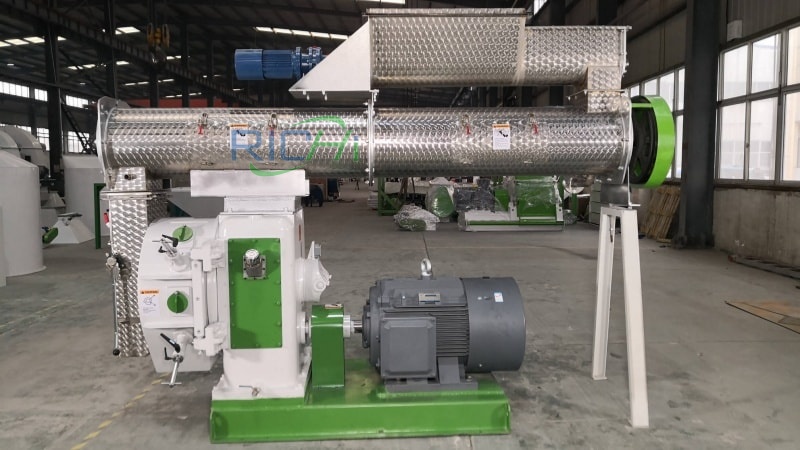
For smaller production requirements, the drying section can also be configured according to the actual scale of the project. A suitable small sawdust dryer can be integrated with the downstream pellet production equipment to provide controlled moisture reduction without unnecessarily increasing system investment.
RICHI Manufacture, as a turnkey engineering supplier, can support the project from customized production line design and equipment manufacturing to overseas transportation and customs clearance, on-site installation and commissioning, operator training, and long-term after-sales follow-up.
Frequently Asked Questions
Does higher initial moisture always mean better drying results?
No. Higher initial moisture simply means that more water must be removed. If the dryer capacity is not adjusted accordingly, the final material may still be too wet.
Can very wet sawdust be dried in a small dryer?
It depends on the actual moisture, throughput, target moisture, and dryer design. A small dryer may need a lower feed rate when processing very wet material.
Why does dryer output decrease when sawdust becomes wetter?
Because more thermal energy is required to evaporate the additional water. If the heat and residence time remain unchanged, less wet material can be processed while maintaining the same final moisture.
Can sawdust be over-dried?
Yes. Over-drying wastes energy and may create unnecessary dust. The goal is to achieve the moisture level required by the downstream process.
How often should sawdust moisture be tested?
The appropriate frequency depends on the stability of the raw material. Plants with large moisture variations should monitor more frequently.
Is a dryer necessary for every wood pellet plant?
No. If the raw material already has suitable and stable moisture, additional drying may not be necessary. Moisture testing should be performed before making the decision.
What is the most important factor when choosing a small sawdust dryer?
The most important consideration is matching the drying system to the actual raw material conditions, especially initial moisture, target moisture, required throughput, and water evaporation load.
Conclusion
Moisture has a direct and significant effect on wood drying results. Initial moisture determines how much water must be removed, while final moisture influences the suitability of the material for pelletizing and other downstream applications.
Higher moisture generally means greater heat demand, longer drying requirements, and potentially lower effective dryer capacity. At the same time, excessive drying can waste energy and create unnecessary processing problems. Therefore, the objective of wood drying should be controlled and uniform moisture reduction rather than simply maximizing drying intensity.
For small biomass projects, a properly selected small sawdust dryer can help control raw material moisture and provide more stable material conditions for pellet production. However, dryer selection should be based on actual raw material characteristics, production capacity, heat source, particle size, target moisture, and the requirements of the pellet mill.
By monitoring moisture before and after drying, maintaining stable feeding, controlling heat and airflow, preventing moisture reabsorption, and coordinating the dryer with the complete pellet production line, manufacturers can improve drying efficiency and achieve more consistent pellet quality.
Ultimately, successful wood drying is a balance between moisture removal, energy consumption, equipment capacity, and downstream processing requirements. A well-designed drying system provides the foundation for stable and efficient wood pellet production.