


The challenge with livestock manure is not only how much is produced. It is also how difficult the raw material can be to handle.
Loose manure varies in moisture, shape, density, and texture. It may be inconvenient to transport over long distances and difficult to package consistently. During wet weather, storage becomes even more complicated. For agricultural producers looking for a more manageable fertilizer format, pelletizing offers a practical alternative.
Turning manure into pellets involves more than compression. The production system must create a material that is physically stable, reasonably uniform, easy to handle, and suitable for the intended application. That means moisture preparation, particle-size control, conditioning, pellet formation, cooling, screening, and packaging all have a role.
This is why a poultry manure pellet machine should be considered as part of a broader processing system rather than a stand-alone answer.
What Problem Does Pelletizing Actually Solve?
It is easy to assume that pellets are simply a smaller version of loose manure. In reality, the physical transformation is much more important.
Loose organic materials often have irregular bulk density. One scoop may contain significantly more material than another. Transportation containers can also become inefficient because the material does not fill available space uniformly.
Pellets create a more controlled form.
Uniform pieces are easier to move through conveyors, fill bags, stack in warehouses, and feed into spreading systems. The final product can also be presented with clearer specifications for customers.
For fertilizer producers, this consistency is commercially valuable.
Moisture Is the Starting Point
Before pellet production begins, moisture must be brought into a workable range.
Fresh manure may contain substantial water. Mechanical pelletizing does not remove this moisture automatically. If wet material is forced into the pelletizing chamber, the process may become unstable, while the resulting product can be difficult to cool and store.
A drying stage is therefore common when the material enters the process too wet.
But drying should not be treated as an isolated step.
The producer should determine the incoming moisture, desired final condition, heat source, and expected output before selecting drying equipment.
In some projects, a rotary drying system is suitable. In others, a different drying configuration may fit better. The correct answer depends on material characteristics rather than simply on plant size.
Why Cow Dung and Poultry Manure Need Different Thinking
Organic fertilizer materials are not interchangeable.
Cow dung often contains different levels of fibrous matter and moisture compared with poultry manure. Bedding systems can further change the characteristics of both materials.
This matters because pelletizing performance depends on the physical condition of the feedstock.
A project designed around cow dung may use different preparation or drying arrangements from one processing poultry manure. Even within the same animal category, changes in bedding, storage time, or feeding practices can alter the material.
A practical plant therefore begins with raw-material testing rather than equipment selection based solely on a catalog photograph.
For producers comparing technologies, a 2-3 T/H cow dung pellet making machine for sale may be relevant for one fertilizer project, while another project may require a different capacity and process arrangement entirely.
Uniform Particle Size Improves Process Stability
Large lumps, long fibers, stones, or other contaminants can interfere with consistent feeding.
A crusher or grinder may therefore be installed upstream of the pelletizing section when required.
The goal is not maximum grinding intensity. The objective is a controlled particle structure suitable for mixing and forming.
Over-grinding can increase energy consumption without producing a meaningful benefit, while insufficient size reduction can create inconsistent pellets.
A good production system therefore aims for “appropriate particle size” rather than “the smallest possible particle.”
What Does Conditioning Actually Do?
Conditioning is often misunderstood in organic fertilizer processing.
At a basic level, conditioning helps prepare the material for mechanical forming. Moisture may be adjusted, ingredients may be blended more thoroughly, and the physical structure of the feedstock may be improved.
For a multi-ingredient organic fertilizer, the mixer can be particularly important.
Suppose a producer combines animal manure with other organic materials and selected additives. The final pellet should not contain a concentrated pocket of one ingredient followed by a section dominated by another.
Uniform mixing helps create a more consistent product.
This becomes increasingly important when the fertilizer is sold commercially and customers expect the composition to remain stable from bag to bag.
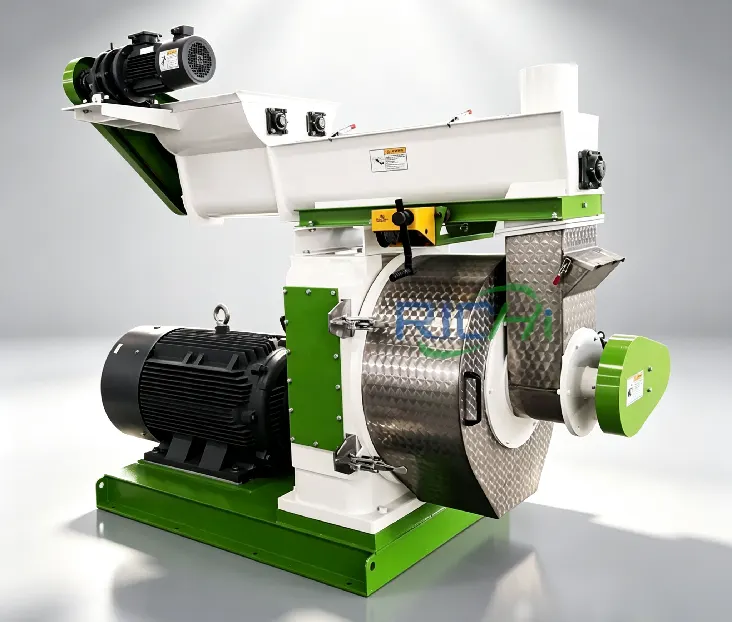
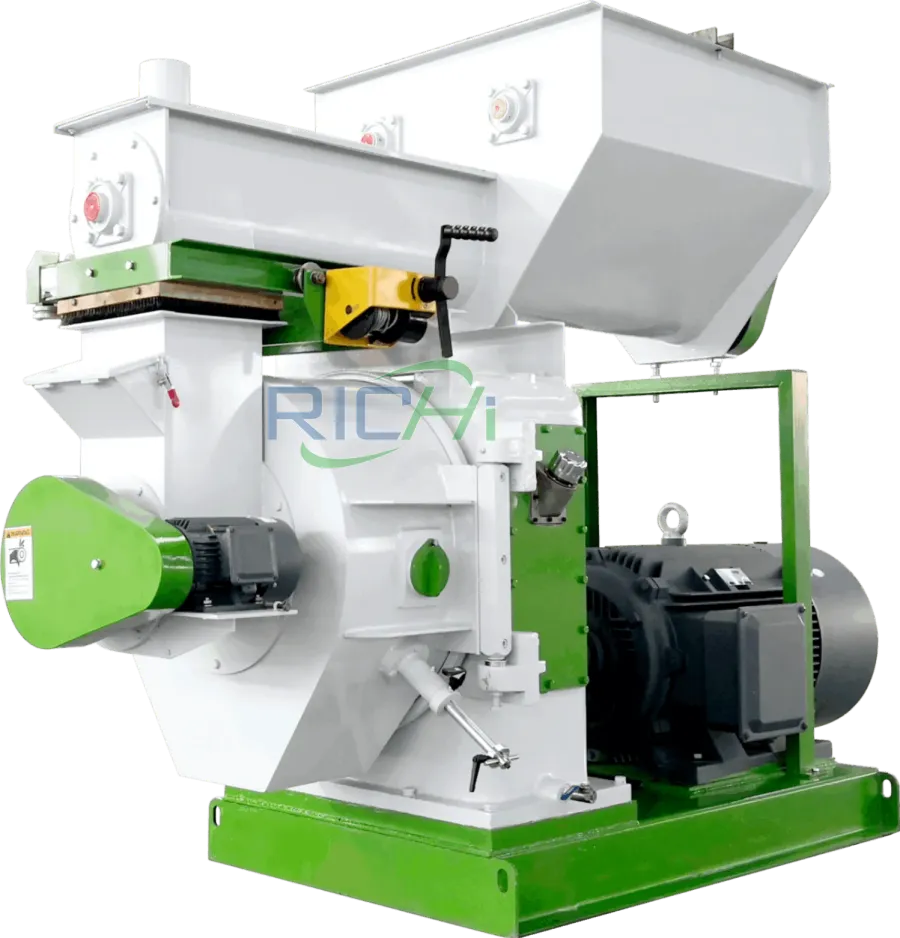
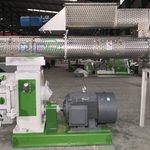
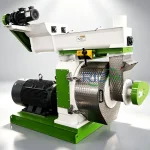
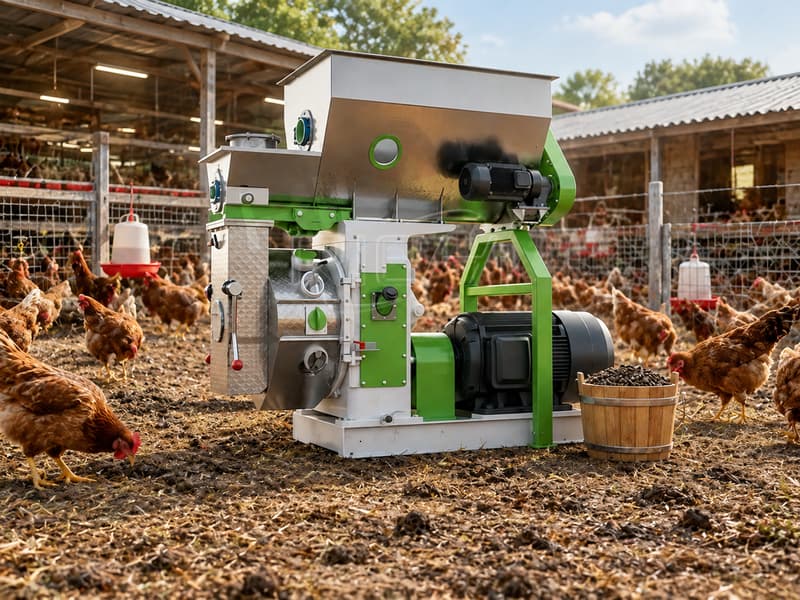
The Pelletizer Is Where Form Becomes Product
Once the material has been properly prepared, it enters the pelletizing stage.
The mechanical objective is relatively straightforward: transform prepared material into cylindrical or otherwise standardized particles.
However, pellet quality depends on several interacting variables, including material moisture, particle size, formulation, compression conditions, die specifications, feeding consistency, and machine operating parameters.
This is why a machine should not be selected solely by advertised output.
A machine rated for a specific throughput may not achieve that number with every raw material. Actual performance depends on the complete process.
(Related Post:https://www.richipelletmill.com/organic-fertilizer-pellet-machine/)
The relationship between throughput and pellet quality is particularly important for new projects. Increasing production too aggressively can create excessive fines or unstable forming if the upstream process cannot keep pace.
What Happens to Fine Powder?
Fines are a normal part of many pellet production processes.
The important question is what the plant does with them.
A screening system can separate undersized material after cooling. Instead of treating fines as waste, many production systems return them to the front of the process.
This creates a more efficient material loop.
The screen also helps the producer deliver a more consistent commercial product.
Without screening, the final product may contain a mixture of properly formed pellets and excessive powder, reducing its visual quality and potentially causing additional dust during packaging.
Cooling Protects the Finished Product
Fresh pellets often leave the forming stage warmer than the surrounding environment.
If they are bagged immediately, the remaining heat and moisture can create condensation inside the package.
A cooler gives the product time to release heat and stabilize before packing.
For commercial fertilizer producers, this is more than a technical detail. Storage conditions can determine whether the product still looks and feels acceptable several weeks or months later.
A stable product is easier to distribute through wholesalers, retail stores, farming cooperatives, and direct agricultural sales channels.
Storage Changes the Economics
Imagine two fertilizer businesses producing the same quantity of organic nutrients.
One sells loose manure locally because transport distance must remain short.
The other produces pellets in bags that can be stacked, loaded onto trucks, and distributed to customers further away.
The second business potentially has more flexibility in market reach because the product is easier to handle.
Of course, packaging adds cost. But it may also add value.
This is why fertilizer producers should evaluate the complete cost per ton, not only the cost of the pelletizing machine.
The calculation should include raw material preparation, drying energy, electricity, labor, maintenance, packaging, storage, transportation, and product losses.
Can Pellet Quality Be Controlled by Appearance Alone?
No.
Pellets that look uniform may still differ in internal density, durability, moisture, or storage stability.
Likewise, a slightly rough-looking pellet may still perform well during handling.
Therefore, commercial operators should define practical quality indicators according to the final market.
For example, a bulk agricultural fertilizer may prioritize durability and low fines, while a retail garden product may place greater emphasis on appearance and packaging consistency.
The quality target should come from customer expectations.
Building a Production Strategy Around the Customer
One of the most effective ways to plan a manure fertilizer plant is to begin with the finished product.
Ask where the fertilizer will be used.
Will it be spread on large farms? Sold to greenhouse growers? Distributed through garden centers? Used internally by a livestock enterprise?
The answers affect pellet size, packaging, production capacity, storage design, and even the preferred formulation.
This customer-first approach can prevent equipment oversizing.
A company does not automatically need a large-scale fertilizer plant simply because it has abundant manure. If the local market can absorb only a few hundred kilograms per hour, building a much larger system may create unnecessary inventory.
Where Smaller Production Lines Fit
Not every organic fertilizer business needs continuous high-volume production.
Some operators process manure seasonally. Others have limited land and local distribution channels.
For these users, compact systems can be attractive because they reduce initial complexity.
A smaller system also makes it easier to test a product, collect customer feedback, and adjust the formulation before expanding production.
Once the market becomes more predictable, the company can add drying capacity, storage, packaging lines, or additional processing stages.
Expansion can then follow demand instead of speculation.
The Role of Equipment Manufacturers
A manure fertilizer project involves multiple mechanical sections, which makes integration important.
A supplier such as pellet maker should therefore be evaluated not only by the pelletizing unit but also by its understanding of material handling, drying, mixing, cooling, screening, and packing.
The advantage of system integration is that each stage can be designed around the next one.
If drying is too slow, the pelletizer starves.
If feeding is inconsistent, pellet quality changes.
If cooling is insufficient, packaging becomes unstable.
If screening is poorly configured, fines remain in the final product.
A successful project is therefore an interconnected process, not a collection of unrelated machines.
Organic Fertilizer as a Practical Circular-Economy Product
Manure pelletizing fits into a broader agricultural trend: converting by-products into standardized resources.
Livestock operations produce manure. Crop production requires nutrients. Processing facilities can connect these two sides of agriculture.
This does not eliminate the need for proper manure management, testing, or responsible fertilizer use. Instead, it creates a more controlled pathway from waste collection to agricultural application.
For investors and farm owners, that may be the strongest reason to consider pelletizing.
The goal is not simply to make pellets.
The goal is to create a fertilizer product that can be produced consistently, transported efficiently, stored safely, and sold with a clear value proposition.
Anyone researching the process can about this find additional background on organic fertilizer equipment, production workflows, and related material-processing technologies.
Once those fundamentals are understood, equipment selection becomes much more logical.
A Better Way to Think About Manure Processing
The future of manure management is unlikely to be defined by one machine.
It will be defined by how effectively producers connect collection, preparation, moisture control, pelletizing, cooling, packaging, and product distribution.
Pellets are valuable because they create standardization.
Standardization creates easier handling.
Easier handling creates broader distribution opportunities.
And broader distribution can turn a disposal challenge into a commercial agricultural product.
That is the real significance of manure pelletization: not simply changing the shape of the material, but changing how the material can participate in the fertilizer market.