
Chicken feed pellet production quality depends on much more than the performance of a pellet mill. A high-quality chicken feed pellet should have a suitable size, stable shape, sufficient durability, appropriate moisture, and a relatively uniform nutritional composition. Achieving these characteristics requires careful control of raw materials, feed formulation, grinding, batching, mixing, conditioning, pelletizing, cooling, screening, and storage.
For poultry feed manufacturers, pellet quality directly affects production efficiency, handling losses, feed distribution, and the consistency of the final product. Poorly produced pellets may generate excessive fines, break easily during transportation, contain too much moisture, or have inconsistent dimensions.
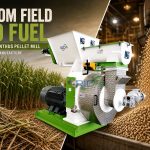
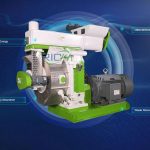
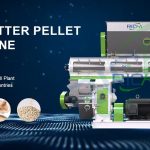
The chicken feed pellet maker is one of the most important machines in this process, but even the best pellet-making equipment cannot compensate for poor raw materials or improper process control. The quality of the finished pellets is the result of the entire production system working together.
This article explains the major factors that affect chicken feed pellet production quality and provides practical guidance for improving pellet consistency.
1. Feed Formula
The feed formula is the starting point of chicken feed pellet production.
Different ingredients have different physical and pelletizing characteristics. Corn, wheat, soybean meal, rice bran, wheat bran, vegetable protein sources, minerals, vitamins, and other additives all behave differently during grinding, mixing, conditioning, and pelletizing.
A formula with a high proportion of cereal grains may pelletize differently from one containing more fiber or protein meals.
The formula affects:
- Pellet hardness
- Pellet durability
- Production capacity
- Energy consumption
- Moisture requirements
- Die selection
- Conditioning requirements
Therefore, the feed formula should be considered when selecting and configuring the production equipment.
2. Raw Material Quality
Raw material quality has a direct impact on pellet production.
Corn, wheat, soybean meal, and other ingredients should be clean and stored under appropriate conditions.
Important raw material characteristics include:
- Moisture content
- Particle size
- Bulk density
- Fiber content
- Oil content
- Impurities
- Storage condition
Raw materials with excessive moisture can create problems during grinding and pelletizing.
Moldy or contaminated materials may affect feed quality and should not be allowed to enter the production system.
Consistent raw materials make it easier to maintain stable production parameters.
3. Raw Material Moisture
Moisture is one of the most important factors affecting pellet quality.
If the feed mixture is too dry, the material may not bind effectively during pelletizing. This can lead to fragile pellets and increased fines.
If the material contains excessive moisture, pellets may become soft or difficult to cool and store.
Moisture affects:
- Pellet formation
- Pellet durability
- Production capacity
- Energy consumption
- Cooling performance
- Storage stability
The optimal moisture level depends on the formula and processing technology.
For this reason, moisture should be monitored throughout the production process rather than only checked after pellet production.
4. Particle Size After Grinding
Grinding technology has a significant effect on pellet quality.
Feed ingredients need to be ground to a suitable particle size before mixing and pelletizing.
If particles are too large, they may create weak points in the pellets and make it more difficult to produce a uniform product.
If particles are excessively fine, energy consumption may increase and dust generation may become excessive.
The ideal particle size depends on:
- Chicken age
- Pellet diameter
- Feed formula
- Raw material characteristics
- Pellet mill design
- Production capacity
A properly adjusted hammer mill can provide a suitable particle size distribution for efficient pellet production.
5. Grinding Uniformity
Particle size is not the only consideration. The distribution of particle sizes is also important.
A mixture containing extremely large and extremely small particles may not behave consistently during pelletizing.
Uniform grinding improves mixing and helps create more consistent compression inside the pellet mill.
It can also improve the distribution of steam and moisture during conditioning.
Therefore, the grinding system should be checked regularly for:
- Screen condition
- Hammer wear
- Motor load
- Material flow
- Particle size distribution
Stable grinding provides a better foundation for high-quality pellets.
6. Accurate Batching
The nutritional composition of chicken feed depends on accurate ingredient proportions.
Automatic batching systems can weigh different raw materials according to a programmed formula.
If batching is inaccurate, the nutritional composition of the feed can vary between batches.
It can also affect physical pellet characteristics because changes in ingredient proportions may change the material’s pelletizing behavior.
For commercial feed production, accurate batching is therefore important for both nutritional consistency and pellet quality.
7. Mixing Uniformity
After batching, the ingredients must be mixed thoroughly.
A good mixer should distribute major ingredients and small-dose additives evenly throughout the batch.
Poor mixing may lead to:
- Uneven nutrient distribution
- Inconsistent pellet characteristics
- Variation in pellet color
- Variable density
- Different moisture levels
Mixing time should be long enough to achieve uniformity but not unnecessarily long.
Mixer loading, ingredient particle size, liquid addition, and mixer design can all affect mixing performance.
8. Feed Ingredient Fiber Content
Fiber has a strong influence on pelletizing behavior.
Ingredients such as wheat bran, rice bran, straw-derived materials, and certain plant meals can increase the fiber content of the feed.
Fiber can affect:
- Pellet hardness
- Pellet durability
- Die resistance
- Production capacity
- Energy consumption
High-fiber formulas may require different grinding and conditioning conditions.
The die compression ratio may also need to be adjusted.
Therefore, a chicken feed pellet maker should be selected and configured according to the actual feed formula rather than based only on its nominal capacity.
9. Oil and Fat Content
Oil and fat can influence pellet formation.
A certain amount of oil can improve the energy density of feed and may affect the physical properties of the mixture.
However, excessive liquid fat may reduce the friction required for compression through the die.
This can result in:
- Reduced pellet durability
- Slower pellet formation
- Changes in pellet density
- Unstable production
Liquid ingredients should therefore be added carefully and distributed uniformly.
In some production systems, additional oil can be applied after pellet cooling through a coating system.
10. Steam Conditioning
Steam conditioning is one of the most important technologies for improving pellet quality.
During conditioning, steam is introduced into the feed mixture before it enters the pellet mill.
The combination of heat and moisture can improve the physical characteristics of the feed and make it easier to compress.
Proper conditioning can improve:
- Pellet durability
- Pellet formation
- Production capacity
- Starch gelatinization
- Material binding
- Pellet appearance
However, excessive steam can create high moisture and unstable pellet formation.
The conditioner should therefore be adjusted according to the feed formula and production rate.
11. Conditioning Temperature
Temperature is another important parameter.
The temperature achieved during conditioning depends on steam quality, moisture, residence time, and equipment design.
Insufficient conditioning may result in poor pellet formation and excessive fines.
Excessive heat may not be desirable for all feed components, particularly when formulas contain heat-sensitive ingredients.
The production process should therefore aim for controlled and consistent conditioning rather than simply maximizing temperature.
12. Conditioning Time
The amount of time the feed remains in the conditioner also affects pellet quality.
If conditioning time is too short, steam may not be distributed evenly throughout the feed.
If the residence time is excessive, production efficiency may decrease.
A properly designed conditioner should provide sufficient retention time for heat and moisture to penetrate the feed mixture.
The required time varies according to:
- Feed formula
- Particle size
- Steam conditions
- Production capacity
- Equipment design
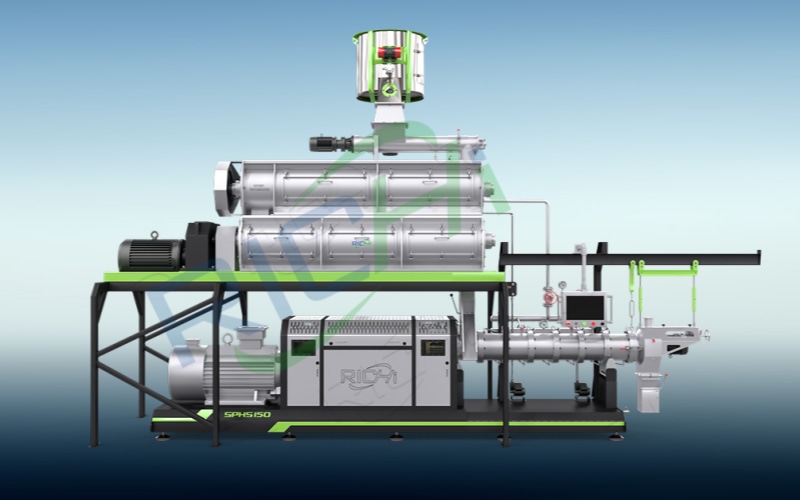
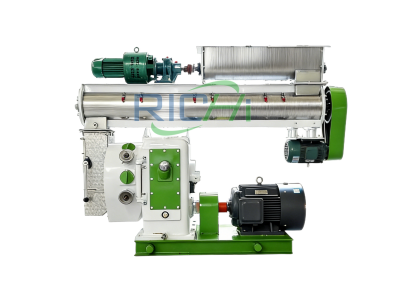
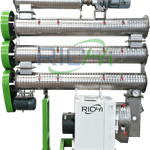
13. Chicken Feed Pellet Maker Selection
The pellet-making machine is at the center of the production process.
Different models have different capacities, die configurations, drive systems, and compression characteristics.
When selecting a chicken feed pellet maker, manufacturers should consider:
- Required output
- Feed formula
- Pellet diameter
- Die compression ratio
- Motor power
- Energy consumption
- Operating hours
- Automation level
- Maintenance requirements
A machine designed for commercial feed production should provide stable operation under continuous loading.
Choosing equipment based only on the advertised maximum capacity may lead to problems if the machine is not suitable for the actual feed formula.
(Learn more:https://richipelletizer.com/chicken-feed-pellet-machine-for-sale/)
14. Die Compression Ratio
The compression ratio of the pellet die has a significant influence on pellet quality.
It describes the relationship between the effective die thickness and the diameter of the die hole.
Different feed formulas may require different compression ratios.
A die that is too loose may produce fragile pellets with excessive fines.
A die that is too restrictive may increase energy consumption and mechanical load.
Therefore, the die should be selected according to the formula, pellet diameter, and required durability.
15. Pellet Diameter
The diameter of the pellet should match the requirements of the target chickens.
Young chickens generally require smaller feed particles, while older birds can consume larger pellets.
Common poultry feed products include:
- Chick starter feed
- Broiler starter feed
- Broiler grower feed
- Broiler finisher feed
- Layer feed
- Breeder feed
A flexible pellet production system can use different dies to produce different pellet sizes.
Correct pellet diameter contributes to both feed handling and feeding performance.
16. Roller Condition
The rollers inside a ring die pellet mill work together with the die to compress the feed.
Wear on the rollers can gradually affect production.
Possible symptoms include:
- Lower capacity
- More fines
- Uneven pellets
- Increased power consumption
- Unstable machine load
The roller surface and bearings should be inspected regularly.
Correct roller adjustment is also important for maintaining stable compression.
17. Die Condition
The die is another critical wearing component.
Over time, die holes can wear or become blocked.
A damaged or excessively worn die may produce inconsistent pellets.
Regular inspection should focus on:
- Die hole condition
- Blocked holes
- Wear
- Cracks
- Mounting condition
- Surface condition
The die should be cleaned and replaced according to its actual operating condition.
18. Stable Feed Flow
A pellet mill requires a consistent material supply.
If the feed entering the pellet mill fluctuates significantly, the machine load may change continuously.
This can result in inconsistent pellet quality.
A stable feeder can help maintain:
- Uniform production
- Stable motor load
- Consistent compression
- Better pellet dimensions
Variable-frequency feeding systems can adjust material flow according to operating conditions.
19. Pellet Mill Operating Speed
Operating speed also influences pellet production.
The correct speed depends on the pellet mill design and feed characteristics.
Excessive speed may increase mechanical stress or reduce effective conditioning and compression time.
Insufficient speed may reduce output.
Manufacturers should follow the recommended operating range for the specific equipment.
20. Cooling Quality
Fresh pellets leaving the pellet mill are hot and contain moisture.
Cooling is necessary before screening and packaging.
A counterflow cooler is widely used in commercial feed production.
Effective cooling helps:
- Stabilize pellet structure
- Reduce moisture
- Lower pellet temperature
- Improve storage stability
- Reduce condensation risk
If pellets are not cooled properly, they may break more easily during handling or develop storage problems.
21. Screening Efficiency
Screening separates qualified pellets from fines and broken material.
A suitable screen can improve finished product consistency.
However, excessive fines may indicate that the pelletizing process itself needs improvement.
Potential causes include:
- Poor conditioning
- Incorrect die compression
- Worn rollers
- Insufficient cooling
- Excessive conveying
- Improper pellet mill settings
Screening should therefore be viewed as part of an integrated quality-control process.
22. Mechanical Handling
Even pellets produced at high quality can be damaged by poor conveying.
Pellets may pass through elevators, conveyors, bins, packing machines, and trucks.
Excessive impact or repeated drops can create cracks and fines.
The conveying system should therefore be designed to minimize unnecessary impact.
Proper conveyor speed, transfer-point design, and material drop height can help preserve pellet integrity.
23. Packaging Technology
Packaging is the final stage before the product reaches the customer or poultry farm.
The packing machine should be matched to the production capacity.
If packaging is too slow, finished pellets may accumulate and create a bottleneck.
If the packaging process creates excessive impact, pellets may break.
Accurate weighing also ensures that each bag contains the intended quantity of feed.
24. Storage Conditions
Finished chicken feed pellets need suitable storage conditions.
Excessive moisture, high temperatures, poor ventilation, or contamination can negatively affect feed quality.
Storage areas should be:
- Dry
- Clean
- Well ventilated
- Protected from water
- Properly organized
Bags should be handled carefully to minimize pellet breakage.
Good storage management helps maintain the quality achieved during production.
25. Automation and Process Control
Automation can improve production consistency by maintaining stable process parameters.
A centralized control system can monitor:
- Batching
- Mixing
- Steam conditioning
- Pellet mill load
- Cooling
- Screening
- Conveying
- Packaging
Sensors can provide real-time information about temperature, motor current, material levels, and other operating conditions.
This helps operators respond quickly to abnormal conditions.
Automation is particularly valuable for large commercial feed plants where many machines operate simultaneously.
26. Equipment Capacity Matching
A pellet mill should never be considered independently from the rest of the production line.
For example, a high-capacity chicken feed pellet maker may not achieve its designed output if:
- The hammer mill is too small
- The mixer is too slow
- The conditioner cannot handle the required flow
- The cooler is undersized
- The screening system is insufficient
- The packing machine creates a bottleneck
A balanced production line should maintain sufficient capacity at every stage.
27. Preventive Maintenance
Regular maintenance is essential for consistent pellet quality.
Maintenance should include:
- Die inspection
- Roller inspection
- Bearing lubrication
- Gearbox checks
- Motor inspection
- Conveyor maintenance
- Conditioner cleaning
- Cooler inspection
- Screen maintenance
Worn components should be replaced before they cause major production problems.
Preventive maintenance can reduce unplanned downtime and improve the consistency of production.
28. Operator Experience
Even automated equipment requires skilled operators.
Operators need to understand how feed formula, moisture, steam, particle size, die condition, and pellet mill load are related.
They should be trained to identify signs of abnormal operation.
For example, sudden increases in motor load may indicate excessive feed flow, foreign material, or a developing blockage.
An increase in fines may indicate problems with conditioning, die compression, cooling, or roller condition.
Experienced operators can make appropriate adjustments before the problem becomes serious.
29. Quality Control of Finished Pellets
Finished chicken feed should be tested regularly.
Physical quality indicators may include:
- Pellet diameter
- Pellet length
- Moisture
- Bulk density
- Pellet durability
- Fines percentage
- Appearance
Nutritional testing may also be performed for:
- Protein
- Fat
- Fiber
- Moisture
- Calcium
- Phosphorus
- Other relevant nutrients
Combining physical and nutritional testing provides a more complete picture of feed quality.
30. Different Chicken Feeds Require Different Processing Conditions
Not all chicken feed should be produced using exactly the same process parameters.
Broiler starter feed, broiler finisher feed, layer feed, and breeder feed may have different formulas and pellet sizes.
The production line should therefore provide enough flexibility to adjust:
- Grinding
- Batching
- Mixing
- Steam conditioning
- Die configuration
- Pellet size
- Cooling
- Crumbling
A flexible production system can support multiple products while maintaining consistent quality.
31. How to Improve Chicken Feed Pellet Quality
Several practical measures can be used to improve pellet quality.
First, maintain stable raw material moisture and quality.
Second, optimize grinding to produce an appropriate particle size.
Third, use accurate batching and thorough mixing.
Fourth, control steam conditioning carefully.
Fifth, select a suitable die compression ratio for the formula.
Sixth, maintain the rollers and die in good condition.
Seventh, ensure stable feeding into the pellet mill.
Eighth, provide sufficient cooling and screening capacity.
Finally, monitor the finished pellets and use production data to identify recurring problems.
These measures work together rather than independently.
32. Designing a Complete Chicken Feed Pellet Production System
A commercial chicken feed plant may include:
Raw Material Receiving → Cleaning → Grinding → Batching → Mixing → Conditioning → Pelletizing → Cooling → Screening → Crumbling → Packaging
Depending on the product range, some processes may be optional.
For example, a plant producing only larger broiler pellets may not require a crumbler.
A plant producing starter feed may need crumbling equipment.
The line should therefore be designed according to the customer’s products, capacity, formulas, and future expansion plans.
(hop over to this site:RICHI PELLETIZER)
33. Why Turnkey Engineering Can Improve Quality
A turnkey feed production project allows the entire system to be designed as an integrated process.
This means that the supplier can consider:
- Raw material characteristics
- Feed formulas
- Production capacity
- Pellet size
- Equipment configuration
- Factory layout
- Automation
- Cooling requirements
- Packaging
- Storage
An integrated approach reduces the risk of creating bottlenecks between individual machines.
It also makes it easier to establish stable operating parameters for the complete production process.
34. Conclusion
Chicken feed pellet production quality is influenced by many interconnected factors.
Raw material quality, moisture, grinding, batching, mixing, fiber and oil content, steam conditioning, pellet die selection, roller condition, feeding stability, cooling, screening, conveying, packaging, storage, automation, and maintenance can all affect the final product.
The chicken feed pellet maker plays a central role in forming the feed into stable pellets, but its performance depends on the conditions created by the rest of the production line.
High-quality pellets require an appropriate balance between feed formulation and mechanical processing. A suitable particle size, accurate ingredient ratio, uniform mixing, controlled conditioning, correct die compression, and proper cooling can significantly improve pellet consistency.
For poultry feed manufacturers, the best approach is to evaluate the entire production process rather than focusing on one machine. When grinding, batching, mixing, conditioning, pelletizing, cooling, screening, and packaging equipment are properly matched, the production line can achieve more stable quality and more efficient operation.
A professionally designed chicken feed pellet production line can therefore provide manufacturers with greater control over pellet size, durability, moisture, nutritional uniformity, and production consistency while supporting the requirements of different poultry growth stages.