




When entrepreneurs research cat litter manufacturing, equipment price is often the first number they ask about.
But the purchase price of one machine rarely determines the real cost of producing cat litter.
A commercial factory includes raw-material handling, storage, drying, size reduction, forming, cooling, screening, conveying, dust management, electrical systems, packaging, installation, labor, maintenance, utilities, and logistics.
In addition, the cost structure changes according to raw-material moisture, factory capacity, product specification, packaging style, and operating schedule.
For this reason, a useful project evaluation should focus on the total production system.
Raw Material Can Be the Biggest Variable
Sawdust can sometimes be available as a low-cost residue, but that does not mean it is automatically free.
The true raw-material cost may include collection, transport, sorting, storage, contamination control, and moisture management.
A business located next to a large woodworking factory may have a significant logistics advantage over a manufacturer that has to transport sawdust hundreds of kilometers.
Therefore, location can influence project economics almost as much as machinery.
The Value of Local Supply
Suppose a cat litter producer has access to a stable stream of suitable sawdust within a short transport distance.
The company can potentially reduce incoming freight costs and improve supply predictability.
By contrast, a factory dependent on multiple distant suppliers may face greater variation in moisture and material quality.
This can increase both logistics and processing costs.
For a serious project, raw-material mapping should therefore happen before equipment purchasing.
Why Moisture Changes the Cost Structure
Water is heavy.
If a manufacturer transports wet sawdust, it is effectively paying to move water to the factory.
The dryer must then remove that water using fuel or another energy source.
This means moisture affects the project twice: once through transportation and again through drying.
A lower-moisture feedstock can therefore improve logistics and reduce drying requirements.
That does not mean material should always be aggressively dried before transport.
The optimum strategy depends on local conditions, fuel prices, storage options, and processing requirements.
Capacity and Economy of Scale
A larger production line may lower certain costs per ton because fixed expenses are spread over greater output.
However, larger equipment also requires higher investment, stronger utilities, more storage, and a larger market.
The economics only work when the factory can actually operate at a sufficient utilization rate.
A plant running far below its intended capacity may have a higher cost per ton than a smaller, better-utilized facility.
For this reason, capacity should be based on realistic sales and raw-material availability.
Estimating a Practical Production Target
A useful method is to start with annual sales demand.
Suppose a company expects to sell 6,000 tons per year.
The next step is to estimate working days and daily operating hours.
From there, the required hourly production can be calculated.
This provides a more practical basis for equipment sizing.
The machine should not be selected solely because its catalogue lists a high output.
The question is whether that output is necessary and sustainable for the business.
The Role of the Forming Machine
The forming stage is obviously important, but it is only one cost component.
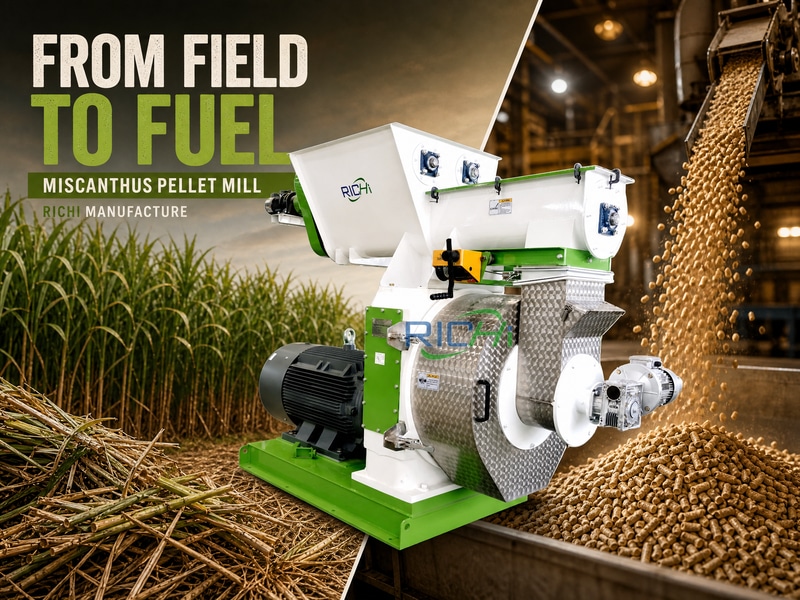
A animal bedding pellet making machine may be relevant to producers developing multiple wood-based animal products, while another forming configuration may be selected for a specific litter product.
The point is that equipment selection should follow the intended product rather than the other way around.
Buyers should consider capacity, die specification, energy use, maintenance, changeover time, and expected operating life.
Long-term operating performance is often more important than the initial purchase price.
Drying Energy Should Be Calculated Carefully
Drying can consume a significant portion of the factory’s energy.
The required energy depends heavily on how much moisture must be removed.
That makes moisture testing essential.
A project using relatively dry sawdust may require a different drying strategy from one receiving material with high moisture.
Heat-source availability also matters.
A factory may evaluate biomass fuel, gas, or other suitable energy sources according to local conditions.
The objective is to build a drying system that fits the project’s actual energy environment.
Why Storage Is a Hidden Cost
Raw-material storage requires space.
Finished-product storage requires even more planning once production reaches commercial scale.
A factory can produce the product efficiently but still experience problems if there is insufficient storage for packaged inventory.
Storage also affects moisture and contamination control.
A proper warehouse layout should allow incoming material, finished goods, packaging supplies, and reprocessed material to move without creating confusion.
Good storage design can support both product quality and logistics efficiency.
Packaging Changes the Economics
Consumer cat litter can be sold through supermarkets, specialty stores, distributors, or online platforms.
Each channel can require different bag sizes and presentation formats.
A small bag may have higher packaging and handling costs per ton.
Larger bags reduce packaging cost per ton but may not suit retail customers.
The correct packaging strategy therefore depends on the target market.
Online sales introduce another variable: transport cost per package.
A product with excellent manufacturing economics can become less competitive if the packaging and distribution model is poorly matched to customer expectations.
Maintenance Is Part of the Real Cost
Machines do not simply consume electricity.
They also require maintenance, spare parts, lubrication, cleaning, inspections, and occasional component replacement.
A lower-priced machine that needs frequent maintenance can become more expensive over its working life.
For this reason, buyers should consider access to replacement components and technical support during the equipment-selection process.
Maintenance planning should also include the time required for cleaning and changeover.
How Product Quality Influences Profitability
A lower manufacturing cost does not automatically create a more profitable business.
If the product generates excessive dust, breaks during transport, or behaves inconsistently, customer complaints can increase.
A consistent product can support stronger brand positioning and repeat purchasing.
This makes quality a commercial variable.
Investing slightly more in screening, cooling, packaging, or quality control can sometimes protect the value of the entire product.
The right question is not “How cheaply can I make pellets?”
It is:
“How efficiently can I produce a consistent product that customers will continue to buy?”
Raw-Material Flexibility and Risk
A factory dependent on one sawdust supplier can face interruptions.
A more flexible business may qualify several suppliers or use compatible material streams.
However, using multiple sources requires stronger raw-material testing.
Different sawdust sources may behave differently during drying and forming.
The plant must therefore establish acceptance criteria.
Flexibility can reduce supply risk, but it should be supported by quality control.
Can Existing Wood-Processing Equipment Reduce Investment?
Potentially, yes.
A woodworking business may already have conveyors, storage, size-reduction equipment, drying facilities, or dust collection.
These assets may reduce the need for duplicate investment.
But compatibility should be checked carefully.
A piece of equipment that works for wood fuel products may not provide the same conditions needed for pet litter.
(Related Post: https://biomasspelletizer.com/sawdust-cat-litter-making-machine/)
The finished product standard remains the deciding factor.
Where Does Automation Deliver Value?
Automation can improve labor efficiency and process consistency.
Automatic feeding reduces manual intervention.
Sensors can help monitor moisture or equipment conditions.
Central controls can coordinate multiple machines.
Automatic packaging can improve throughput.
However, automation should be introduced strategically.
A small plant may benefit most from simple reliable controls.
A large commercial factory may gain more from integrated monitoring and automated material routing.
The return on automation depends on production scale and labor cost.
Understanding the Break-Even Point
A useful financial model should include:
Raw-material cost.
Transport.
Electricity.
Fuel.
Labor.
Maintenance.
Packaging.
Factory overhead.
Equipment depreciation.
Financing cost, where applicable.
Expected selling price.
Annual utilization.
From these values, a producer can estimate the approximate cost per ton and calculate the production volume needed to cover fixed costs.
This is much more useful than looking at machine price alone.
Scaling a Factory Without Overinvesting
A staged expansion model may be suitable for businesses entering a new market.
The company can begin with a manageable capacity, validate product demand, develop distribution channels, and then add equipment as sales increase.
This reduces the risk of building a large factory before the market has been tested.
A modular layout can make such expansion easier.
Future storage, utilities, conveyors, and packaging capacity can be considered during the first installation.
Choosing Suppliers Based on Engineering Capability
A machinery supplier should be able to discuss the entire process.
The conversation should include raw material, capacity, moisture, final product, energy source, packaging, factory layout, and expected operating schedule.
A supplier focused only on selling a machine may not identify downstream bottlenecks.
For investors, engineering capability can therefore be an important part of the supplier evaluation.
When comparing a pellet maker, buyers should look beyond catalogue specifications and ask how the machine fits into the complete production process.
What Should Be Included in a Project Quote?
A useful quotation should make the project boundaries clear.
It should indicate equipment included, expected capacity conditions, major utilities, control systems, spare parts, installation responsibilities, packaging scope, and any optional equipment.
The more clearly these items are defined, the easier it becomes to compare different proposals.
A low initial quotation may exclude important systems that later become necessary.
A higher quotation may include more complete infrastructure.
Comparison should therefore be based on the same project scope.
Why Market Positioning Matters
The final selling price is influenced by how the product is positioned.
A basic bulk litter product competes differently from a premium branded biodegradable litter.
Customers may pay for product attributes such as low dust, natural ingredients, convenient packaging, and consistent quality.
This creates a direct connection between production engineering and marketing.
A factory should therefore be designed around the value proposition of the product rather than around the lowest possible manufacturing cost.
A More Useful Way to Estimate Investment
Instead of asking:
“How much does a cat litter machine cost?”
A better set of questions is:
How much raw material is available?
How much finished product must be produced each year?
What moisture enters the factory?
What pellet specification is required?
How will the product be packaged?
Where will it be sold?
How much storage is needed?
What utilities are available?
Which existing machines can be reused?
What future expansion is expected?
These questions produce a far more realistic investment picture.
Conclusion
The real cost of a sawdust cat litter factory is determined by the entire production system rather than one piece of machinery.
Raw-material logistics, moisture, drying, capacity utilization, energy, maintenance, packaging, storage, and product quality all influence profitability.
Businesses that evaluate these variables together can make more informed equipment and investment decisions.
The strongest projects are not necessarily the largest or cheapest.
They are the ones where the production process, market strategy, raw-material supply, and financial model are aligned.
For manufacturers considering a new wood-based pet product line, thoughtful planning at the beginning can prevent costly changes later.
More practical industry information and project discussions can also be explored through our blog here.