
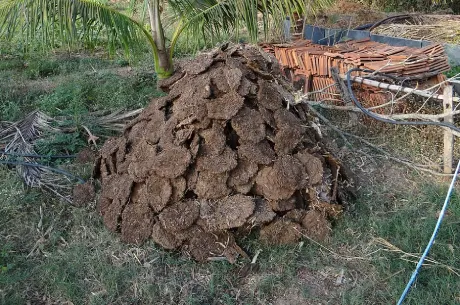
Cow manure is one of the most widely available organic residues in cattle-producing areas. It contains organic matter and plant nutrients, making it potentially useful for soil improvement when it is properly treated and managed. However, fresh manure is wet, bulky, biologically active, and difficult to transport over long distances.
Converting it into fertilizer pellets provides one possible way to improve its handling characteristics. Pelletized organic fertilizer is easier to store, transport, measure, and apply than loose manure or compost. At the same time, the pelletizing process can help create a more uniform physical product.
But how does cow manure actually become fertilizer pellets? What preparation is required before granulation? Does all manure need to be dried first? How large should the processing line be?
These questions are more important than simply asking which machine has the highest capacity. A successful manure fertilizer project begins with understanding the raw material and designing the process around the final product.
Why Is Cow Manure Used for Organic Fertilizer?
Cattle digest large quantities of plant-based feed, but not all of the organic material is completely broken down during digestion. As a result, manure contains partially decomposed organic matter as well as nutrients.
When appropriately composted and processed, this material can contribute organic matter to agricultural soils. Organic fertilizers made from manure are commonly used to complement other soil-management practices.
However, fresh manure should not simply be collected and immediately pelletized for every application. It may contain excessive moisture and biologically active material, and its composition can vary considerably.
Proper treatment is therefore essential.
The objective is to transform unstable, wet manure into a mature and manageable fertilizer raw material before the final granulation stage.
What Is the Basic Processing Route?
A typical cow-manure fertilizer process may contain several stages:
- Manure collection
- Preliminary sorting
- Composting or fermentation
- Crushing
- Mixing
- Moisture adjustment
- Granulation
- Drying
- Cooling
- Screening
- Packaging
Not every project requires exactly the same configuration.
For example, a small farm may use natural composting and simple drying before producing fertilizer for its own fields. A commercial fertilizer plant may need continuous feeding, automated conveying, controlled drying, screening, and packaging.
The correct process depends on raw-material characteristics and the intended production scale.
Does Fresh Cow Manure Need to Be Composting First?
In most fertilizer-oriented applications, composting is an important treatment stage.
Fresh manure contains microorganisms and readily degradable organic compounds. During controlled composting, microbial activity breaks down organic matter and generates heat.
A properly managed composting process can help stabilize the material and reduce the problems associated with handling fresh manure.
Moisture, oxygen, temperature, and carbon-to-nitrogen balance all influence composting performance.
If the material is too wet, airflow can be restricted. If it is too dry, microbial activity may slow down. Turning or forced aeration can help provide oxygen and distribute moisture more evenly.
The goal is to obtain mature compost rather than simply allowing manure to sit for a certain number of days.
How Does Moisture Affect Fertilizer Pellet Production?
Moisture is one of the most important variables throughout the process.
During composting, a certain level of moisture is necessary for microbial activity. During pelletizing, however, the material must have physical characteristics suitable for forming.
If the compost is excessively wet, it may stick to equipment and form unstable granules. If it is too dry, the particles may not bind effectively.
After granulation, the product may still require drying to achieve a suitable storage moisture level.
Therefore, moisture management is not a single operation. It is a continuous consideration from composting through final storage.
Operators should ideally measure actual moisture rather than estimating it by appearance alone.
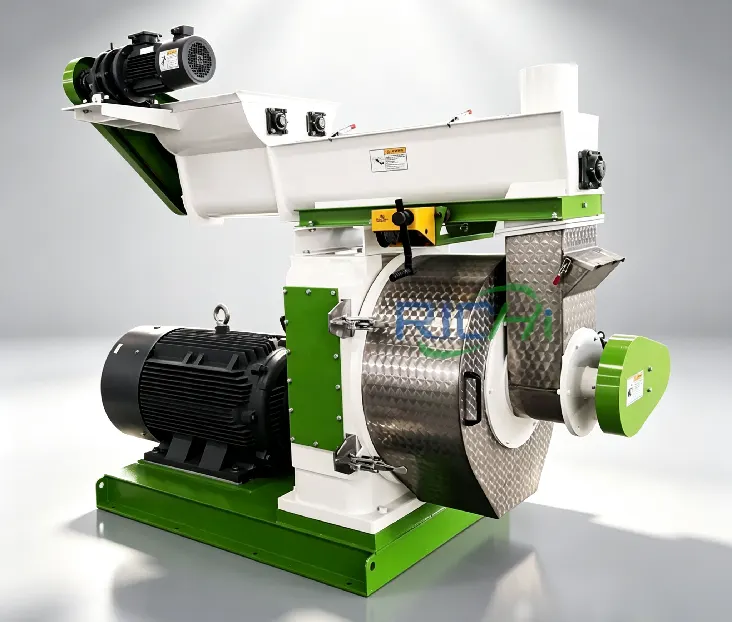
What Does a Cow Manure Fertilizer Pellet Machine Do?
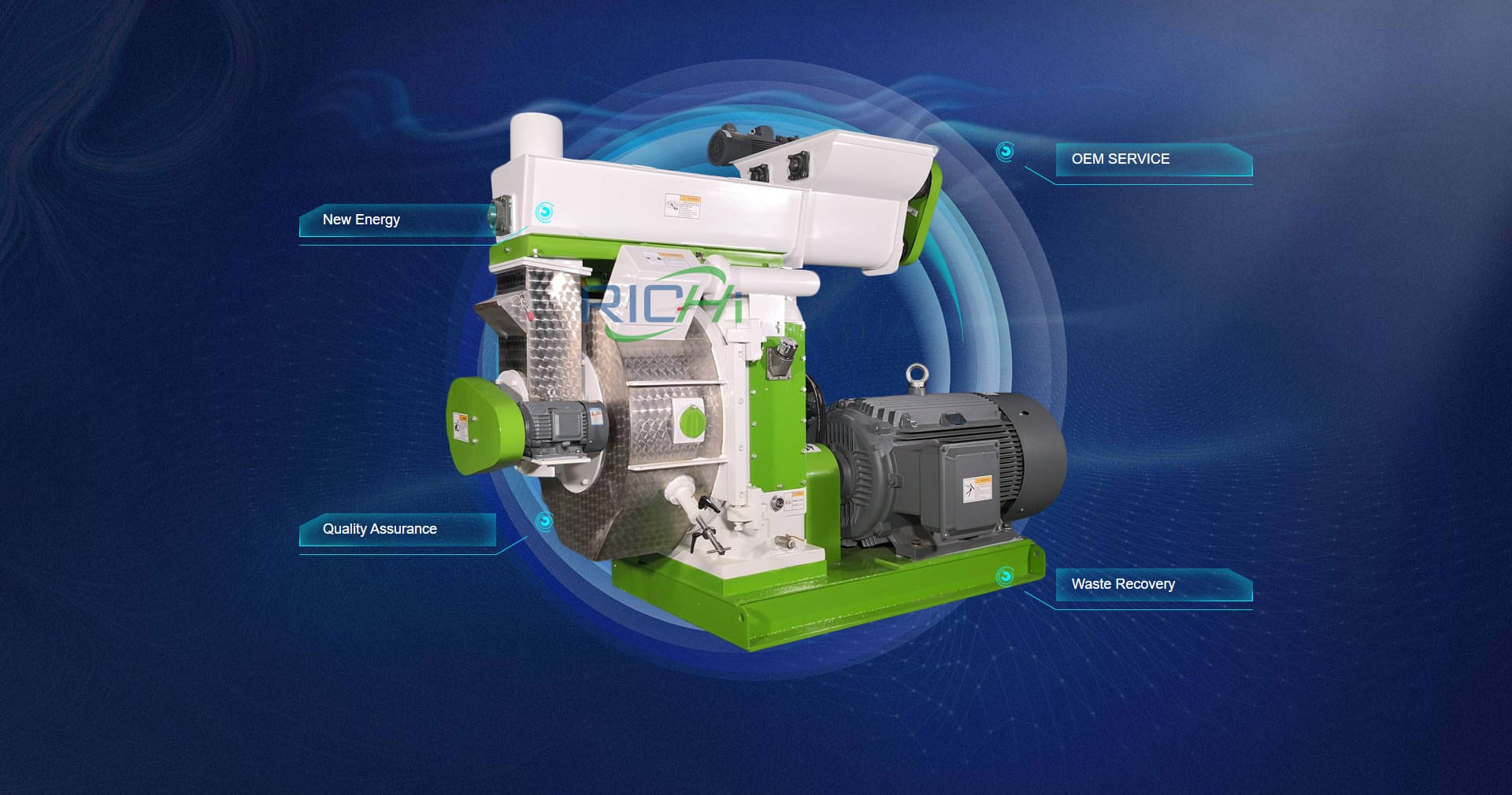
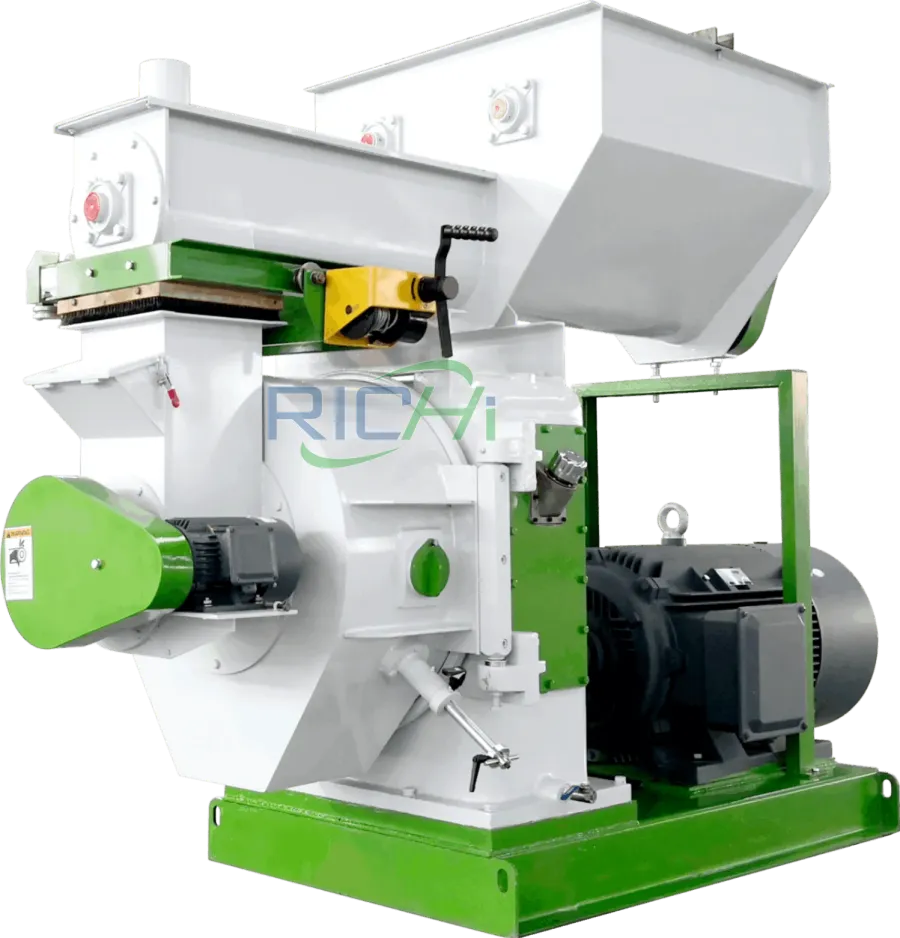
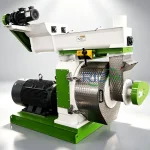
A cow manure fertilizer pellet machine is designed to convert prepared organic fertilizer material into a more uniform granular form.
The machine receives a properly conditioned feedstock and uses mechanical forces to form particles of a relatively consistent size.
Different granulation technologies work in different ways. Some rely mainly on mechanical pressure, while others use rotating movement, centrifugal force, or controlled liquid addition to encourage particle formation.
The appropriate design depends on the properties of the compost, desired pellet size, production capacity, and downstream drying requirements.
It is therefore important to distinguish between the pelletizing stage and the entire fertilizer production process. A granulator cannot compensate for poorly composted or improperly conditioned raw material.
What Particle Size Is Suitable for Organic Fertilizer?
There is no single particle size that is ideal for every agricultural application.
Small pellets may dissolve or break down relatively quickly, while larger granules can sometimes provide different spreading and handling characteristics.
The desired size may also depend on the type of application equipment used by farmers.
For commercial fertilizer production, particle-size uniformity is often more important than simply producing the largest possible pellets.
After granulation, screening can separate particles that are too large or too small. Oversized material can often be crushed and returned to the process, while undersized material may also be recycled.
This creates a more consistent final product and reduces material losses.
How Should Cow Manure Be Prepared Before Granulation?
Preparation begins with removing unwanted materials.
Stones, pieces of metal, plastic, and other foreign objects should be removed before the material reaches crushers or granulators.
The compost may then be crushed to break apart large lumps. This creates a more uniform feedstock for mixing and granulation.
If multiple organic materials are being combined, a mixer can help distribute them evenly.
For example, cow manure may be combined with crop residues, composted plant material, or other suitable organic ingredients. The formulation should be based on the desired fertilizer characteristics rather than simply using whatever materials are available.
Uniform preparation helps the granulator operate more consistently.
Can Other Animal Manures Be Used in the Same Fertilizer System?
Potentially, yes, although different animal manures behave differently.
Poultry manure is usually more concentrated and may have different moisture and nutrient characteristics than cattle manure. Pig manure can also differ significantly in moisture content and composition.
Because of these differences, a processing line designed for several manure types may require adjustable operating parameters.
For example, a chicken manure pellet machine to turn chicken waste into organic fertilizer may use a process that is broadly similar to cattle-manure fertilizer production, but the raw-material preparation requirements can be different.
This is why multi-material fertilizer plants should be designed around actual laboratory or material-test data rather than assuming that every manure type behaves identically.
Can Cow Manure Be Mixed With Crop Residues?
Yes, and in some situations this can be useful.
Crop residues such as straw, husks, and other plant materials can change the physical structure and moisture characteristics of manure-based compost.
Some materials can provide additional carbon during composting, while others may improve the texture of the finished compost.
However, adding too much dry biomass can dilute the nutrient concentration of the final fertilizer or make the mixture difficult to process.
The best formulation depends on the characteristics of the available manure and the intended fertilizer product.
A practical approach is to test different formulations on a small scale before establishing a fixed commercial recipe.
Is a Dryer Necessary After Granulation?
In many commercial fertilizer processes, drying is an important downstream stage.
Granulated material can contain more moisture than is desirable for long-term storage. Excessive moisture may cause particles to stick together or lose their mechanical strength.
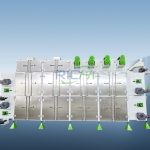
A fertilizer dryer reduces moisture under controlled conditions.
The required drying capacity depends on the incoming moisture, production rate, target moisture, dryer type, and operating conditions.
Natural drying may be sufficient for some small-scale projects, particularly in warm and dry climates. However, commercial operations generally need more predictable moisture control.
Energy efficiency should also be considered because drying can represent a substantial operating cost.
Why Is Cooling Used After Drying?
Freshly dried fertilizer pellets can be warm when they leave the dryer.
Packaging them immediately may trap heat and residual moisture inside the bags. This can contribute to condensation and storage problems.
A cooling stage allows the product temperature to approach ambient conditions before screening and packaging.
Cooling can also improve handling and reduce the risk of moisture migration during storage.
The exact equipment arrangement depends on the dryer and plant design, but cooling is often considered an important part of a complete commercial fertilizer line.
How Does Screening Improve Fertilizer Quality?
Granulation does not always produce particles of exactly the same size.
A screening machine separates the finished product into different size ranges.
Material that meets the target specification can continue to packaging, while oversized particles can be crushed and returned to the production process.
This recycling approach helps reduce waste and improve production efficiency.
Screening is particularly useful for commercial products because uniform granules are generally easier to package, transport, and apply.
The screen opening should be selected according to the target particle-size range rather than simply using a standard configuration.
What Should Be Considered When Choosing the Production Capacity?
Capacity should be calculated from the amount of manure that is realistically available.
For example, if a farm generates only a few tons of manure per day, a very large fertilizer line may remain underutilized.
A commercial operation collecting manure from several farms may have enough raw material to justify a larger continuous system.
Seasonal changes should also be considered.
Cattle numbers, feeding practices, bedding materials, and manure collection methods can all affect the daily supply.
It is useful to calculate capacity based on average availability while leaving some flexibility for seasonal fluctuations.
Does the Site Need a Large Amount of Space?
A fertilizer plant requires more space than the granulator itself.
Raw manure needs an appropriate receiving area. Composting requires dedicated space or composting equipment. Finished compost needs temporary storage before granulation.
There must also be room for crushing, mixing, granulation, drying, cooling, screening, packaging, and finished-product storage.
Vehicle movement is another important consideration.
If trucks cannot conveniently enter and leave the facility, raw-material handling can become inefficient even if the machinery itself performs well.
A good plant layout should therefore consider material flow from the moment manure arrives until the fertilizer is shipped.
What Environmental Issues Should Be Considered?
Manure processing can produce odors, dust, moisture, and organic wastewater if not properly managed.
The composting area should be designed to minimize uncontrolled runoff. Drainage systems should prevent contaminated water from entering surrounding areas.
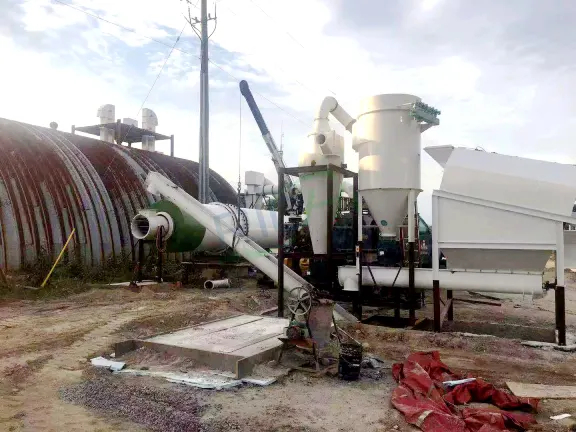
Dust can be generated during crushing, screening, and handling of dried fertilizer. Appropriate ventilation and dust-control measures may therefore be required.
Odor management is particularly relevant during manure storage and composting.
The exact environmental requirements depend on local regulations, plant scale, site location, and the type of raw material being processed.
Environmental planning should be included during the initial design rather than added later.
How Much Automation Does a Small Fertilizer Plant Need?
Automation can improve process consistency, but it is not necessarily required at every stage.
A small farm-based fertilizer project may use manual feeding and basic controls.
As production increases, automatic conveyors, feeders, weighing systems, temperature monitoring, and centralized control can reduce labor requirements.
Automation is particularly useful when several machines need to operate continuously at coordinated rates.
However, excessive automation can also increase installation and maintenance complexity.
The appropriate level should therefore be determined by production volume, labor costs, process complexity, and the desired degree of operational control.
How Can Fertilizer Quality Be Maintained?
Consistent fertilizer quality starts with consistent compost.
If one batch of compost is mature and dry while another batch is still wet and biologically active, the granulation process may behave differently.
Operators should monitor key indicators such as moisture, particle size, organic matter, and nutrient characteristics.
For commercial fertilizer, laboratory testing may be necessary to verify nutrient content and compliance with local regulations.
Physical quality should also be checked.
Finished pellets should be reasonably uniform, sufficiently strong for handling, and stable during storage.
Regular sampling provides useful information about whether the process is remaining within the desired operating range.
What Raw Materials Can Be Added to Improve the Formula?
Cow manure does not have to be the only ingredient in an organic fertilizer.
Depending on the formulation, agricultural residues, composted plant materials, mineral amendments, or other permitted organic materials may be incorporated.
However, every additional ingredient changes the characteristics of the final product.
For example, adding a large amount of dry plant residue may improve moisture control but lower the nutrient concentration per unit of weight.
A more systematic approach is to identify the desired nutrient profile first and then determine which raw materials can provide it.
Nutrient analysis is particularly useful when producing fertilizer for commercial sale.
What Should Be Tested Before Buying Equipment?
A material test is often more useful than simply comparing machine specifications.
The test should examine the actual cow manure or compost that will be processed.
Important characteristics include moisture content, fiber content, particle size, bulk density, compost maturity, and the presence of foreign materials.
The desired final pellet size should also be specified.
If several raw materials will be mixed together, representative samples of the complete formulation should be tested.
This information allows the equipment configuration to be matched more closely to the actual process.
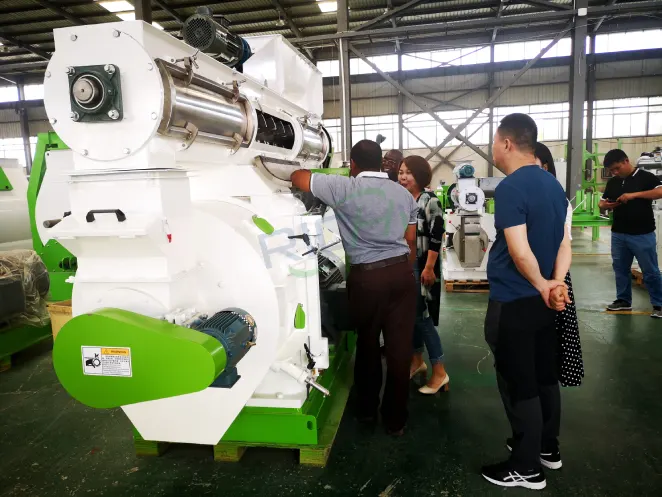
What Should a Small Project Consider Before Construction?
Before construction begins, the project should have a basic process flow and site layout.
The layout should allow materials to move in one direction where possible:
Raw manure → Composting → Crushing → Mixing → Granulation → Drying → Cooling → Screening → Packaging
This reduces unnecessary transportation and makes the production process easier to supervise.
Utility requirements should also be checked.
Electricity, water, fuel, drainage, ventilation, and access roads all influence plant operation.
Maintenance access should not be overlooked either. Every major machine should have enough surrounding space for inspection and replacement of wearing parts.
Related Post: https://commercialpelletmill.com/cow-dung-pellet-making-machine/
How Long Does It Take to Build a Fertilizer Processing Line?
The construction period depends on the size and complexity of the project.
A small system made up of individual machines may require relatively limited civil work and installation.
A larger commercial plant may require foundations, buildings, storage facilities, electrical installation, drying systems, conveyors, control systems, commissioning, and operator training.
Equipment manufacturing and transportation also affect the schedule.
Site preparation should ideally begin before the machinery arrives so that installation can proceed efficiently.
The project timeline should therefore cover the complete process rather than focusing only on equipment delivery.
What Should Be Considered When Choosing a Manufacturer?
The manufacturer is only one part of the overall project, but technical support can be important when the process involves several stages.
Potential suppliers should be able to understand the characteristics of manure, composting requirements, granulation, drying, cooling, screening, and packaging.
Companies such as pellet plant work in machinery fields related to biomass, fertilizer, and other material-processing applications.
When comparing manufacturers, it is useful to look beyond machine appearance or nominal capacity. Project experience, process design, equipment compatibility, maintenance requirements, spare-parts availability, and technical support can all affect long-term operation.
Is Pelletizing Better Than Using Loose Compost?
Pelletizing is not automatically better for every farm.
Loose compost can be perfectly suitable for direct field application, particularly when the farm is close to the fields where the material will be used.
Pellets become more attractive when transportation, storage, standardized application, or commercial distribution is important.
Pelletized fertilizer occupies a more regular physical form and can be easier to weigh and package.
However, producing pellets requires additional equipment and energy.
The decision should therefore be based on the intended use rather than the assumption that a more processed product is always preferable.
What Is the Main Challenge in Cow Manure Fertilizer Production?
The main challenge is usually consistency.
Cow manure is a biological material, not a standardized industrial raw material. Its moisture, fiber content, nutrient composition, and physical structure can change over time.
This variability means that the processing system needs some flexibility.
Good composting practices, moisture control, proper crushing and mixing, and regular testing can make the downstream granulation process much more stable.
In other words, the quality of the finished fertilizer is determined long before the material reaches the granulator.
Final Thoughts: How Can Cow Manure Become a Useful Fertilizer?
Turning cow manure into fertilizer pellets involves much more than simply putting manure into a pelletizing machine.
The process begins with appropriate collection and storage. Composting then helps stabilize the organic material, while crushing and mixing prepare it for consistent granulation.
After granulation, drying and cooling help achieve suitable storage characteristics, while screening improves particle-size consistency.
The best processing route depends on the manure source, climate, production capacity, desired fertilizer specification, and available infrastructure.
For a small farm, a simple system may be enough to recycle manure for local agricultural use. For a commercial fertilizer plant, a more complete production line may be justified because standardized processing, packaging, and storage become increasingly important.
The most practical approach is therefore to start with the raw material and final product, then work backward to determine the appropriate equipment.
When manure is treated as a resource rather than simply as waste, its organic matter can be incorporated into a more organized agricultural recycling system. With suitable composting, moisture management, granulation, and quality control, cow manure can be transformed into a convenient fertilizer product while reducing the challenges associated with handling large volumes of loose livestock waste.