


Why Is Careful Planning Important Before Building a Pellet Plant?
Biomass pellet production has attracted increasing attention from companies looking for ways to make better use of wood-processing residues and agricultural by-products. Materials such as sawdust, wood chips, rice husk, sunflower husk, and other biomass residues can be compressed into a denser fuel that is easier to store, handle, and transport.
The technology itself is well established, but the success of a pellet project depends on how well the production system matches the raw material and the intended market.
One of the most common mistakes is to start with equipment capacity. An investor may decide that a five-ton-per-hour machine looks suitable and then try to build the rest of the project around it. A more reliable approach is to begin with the available biomass, understand its properties, identify potential customers, and then determine the appropriate processing capacity.
This approach can help avoid unnecessary investment and improve long-term production efficiency.
Start With the Raw Material, Not the Machine
Every biomass project begins with a material source.
For a woodworking factory, this could be sawdust or wood shavings. A forestry business may have wood chips and branches. A rice mill may have rice husk, while an agricultural processor could have sunflower husk or other crop residues.
These materials may all be classified as biomass, but they behave differently during processing.
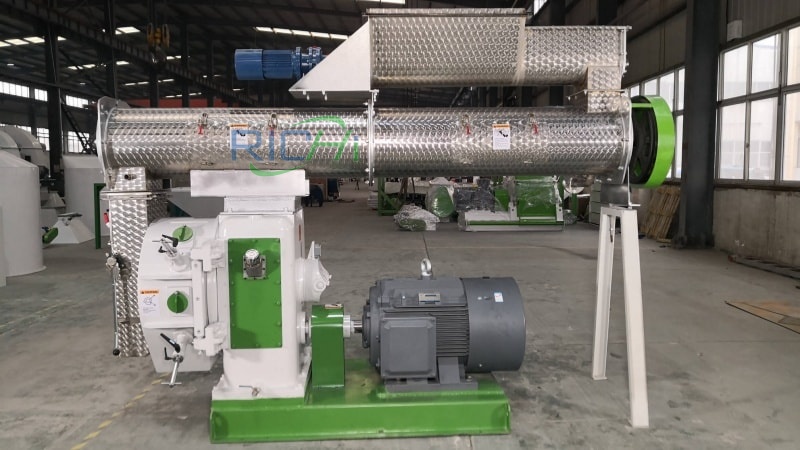
Before selecting a wood chip pellet making machine, investors should determine several basic characteristics of the feedstock:
- Moisture content
- Particle size
- Bulk density
- Ash content
- Fiber structure
- Contamination level
- Daily availability
- Seasonal variation
This information provides the foundation for the rest of the production-line design.
How Reliable Is Your Biomass Supply?
Having access to biomass today does not necessarily mean having enough material throughout the year.
Some agricultural residues are strongly seasonal. Forestry residues can also fluctuate according to harvesting schedules and weather conditions.
A commercial pellet project requires a reliable supply.
Investors should calculate the average daily supply and the minimum expected supply during low-production periods.
If a factory requires 30 tons of usable raw material per day but can obtain only 10 tons during several months of the year, the plant may operate far below its planned capacity.
Storage can partially address seasonal fluctuations, but storage itself requires space and investment.
Why Moisture Deserves Special Attention
Moisture affects almost every stage of biomass pellet production.
Wet biomass generally requires more energy to process because excess water must be removed before stable pelletizing.
It also increases transportation costs because the producer is effectively transporting water along with the usable biomass.
For example, two suppliers may each offer 10 tons of wood chips, but the supplier with substantially drier material may provide more usable dry matter.
Therefore, raw material purchasing should not always be based on price per wet ton.
The producer should consider the amount of usable material obtained after moisture is taken into account.
Does Every Biomass Project Need Drying?
No.
A drying system should be selected according to actual feedstock conditions.
Some sawdust generated from dry woodworking processes may already be suitable for pelletizing after grinding.
Other materials, especially fresh wood chips, may contain too much moisture and require drying.
Agricultural residues can also vary significantly depending on harvesting and storage conditions.
Before investing in a dryer, the producer should measure the material over a representative period rather than relying on a single moisture reading.
Seasonal changes can be important.
How Does Particle Size Affect Pellet Production?
Particle size affects feeding, compression, pellet appearance, and energy consumption.
Large wood chips usually require size reduction before they can be efficiently pelletized.
A crusher or industrial wood chip hammer mill for sale may be used to prepare the material.
However, producing extremely fine particles is not always beneficial.
Grinding consumes electricity, and excessive grinding can increase operating costs without producing a corresponding improvement in pellet quality.
The goal is to create a particle size that works effectively with the selected pelletizing equipment.
This is one reason why a complete production process should be designed rather than choosing individual machines separately.
What Happens During Pelletizing?
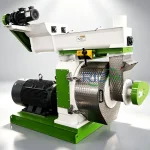
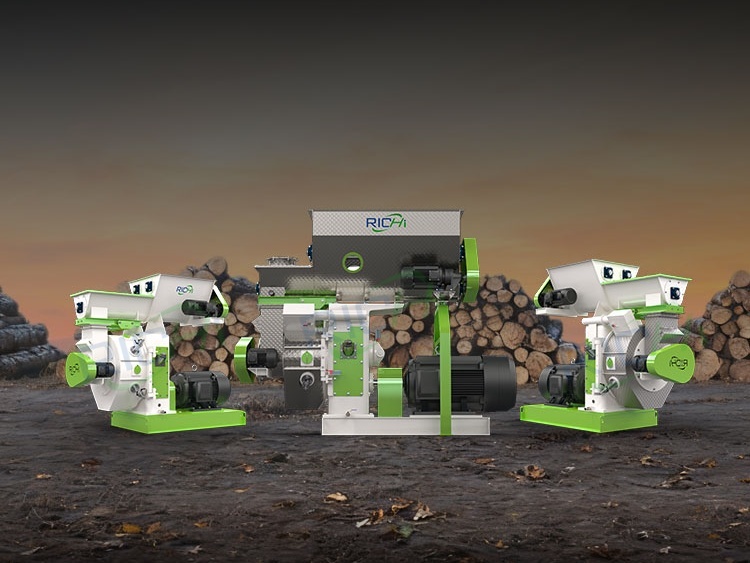
After preparation, biomass enters the pellet mill.
Inside the compression chamber, rollers press the material through a die.
Heat and pressure help compact the biomass into cylindrical pellets.
For many types of wood biomass, natural lignin contributes to the binding process.
The final characteristics of the pellets depend on several variables, including material composition, moisture, particle size, die design, and operating conditions.
Consequently, pellet production is not simply a matter of applying maximum pressure.
The process must be balanced.
How Should Production Capacity Be Determined?
Capacity should reflect both supply and demand.
Imagine a factory has access to 25 tons of usable dry biomass per day.
A production line capable of producing 100 tons per day would not make sense unless additional feedstock could be purchased.
At the same time, if the local market can easily absorb 40 tons per day and biomass availability is sufficient, a very small line may prevent the business from taking advantage of the opportunity.
A practical capacity calculation should consider:
Available feedstock × operating hours × realistic equipment output × market demand
The resulting number is much more useful than simply selecting a machine from a catalog.
Why Is Machine Capacity Not Always the Same as Actual Output?
Equipment manufacturers normally provide capacity under particular operating conditions.
Actual production can change depending on:
- Raw material moisture
- Particle size
- Biomass density
- Feedstock composition
- Pellet diameter
- Equipment condition
- Operator experience
Therefore, buyers should ask what material conditions were used to establish the quoted capacity.
A machine that can theoretically produce a certain number of tons per hour under ideal conditions may produce differently with a customer’s actual biomass.
(Related Post: https://biomasspelletizer.com/wood-pellet-production-line/)
Should You Build a Complete Production Line?
For commercial projects, a complete system can often provide better process coordination.
A typical biomass pellet production line may include:
- Raw material receiving
- Screening or cleaning
- Crushing or chipping
- Grinding
- Drying
- Pelletizing
- Cooling
- Screening
- Packing
The exact arrangement depends on the material.
A dry, fine feedstock may eliminate some stages.
Wet, oversized biomass may require additional preparation.
The best production line is therefore not necessarily the one containing the most equipment. It is the one containing the equipment actually required by the feedstock.
Why Is Material Handling Important?
Conveyors and storage systems may seem less important than the pellet mill, but they can strongly influence plant efficiency.
Biomass needs to move continuously between processing stages.
If material handling is slow or unreliable, the main machines may sit idle.
Storage bins can also help stabilize feeding.
For larger plants, automatic material handling can reduce manual labor and improve consistency.
The layout should therefore be considered at the same time as equipment selection.
What Happens After Pelletizing?
Fresh pellets are hot and relatively soft.
They normally need to pass through a cooling stage before screening and packaging.
Cooling reduces temperature and helps stabilize the finished product.
Screening then removes fines and broken particles.
This creates a more consistent commercial product.
If the production line is designed only around the pellet mill and ignores these downstream stages, the actual plant capacity may be limited.
A balanced line should allow each major stage to process approximately the same material flow.
Why Is Storage Part of Production Planning?
Storage affects both raw material and finished-product quality.
Raw biomass should be protected from unnecessary moisture.
For wood chips stored outdoors, rain can increase moisture and make drying more expensive.
Finished pellets should also be stored in a dry environment.
Poor storage conditions can result in moisture absorption, pellet degradation, and increased fines.
The amount of storage required depends on the supply pattern and sales model.
A factory with continuous biomass supply but seasonal customers may require significant finished-product storage.
What Pellet Specifications Should Be Defined?
The target market should determine the desired product characteristics.
Potential specifications include:
- Pellet diameter
- Moisture
- Bulk density
- Durability
- Ash content
- Heating value
- Fines content
Industrial customers may have different requirements from residential heating customers.
Therefore, producers should speak with potential buyers before finalizing the production process.
It is better to design the product around a real market than to produce a generic pellet and search for customers afterward.
Can Different Biomass Materials Be Blended?
Blending can sometimes help producers maintain a stable feedstock supply.
For example, a business might have access to several types of wood residues or a combination of wood and agricultural biomass.
However, different materials can behave differently during grinding and pelletizing.
They can also have different ash and combustion characteristics.
Any planned blend should therefore be tested.
A consistent mixture may improve production stability, while an uncontrolled mixture can lead to fluctuating product quality.
What About Energy Consumption?
Energy consumption is a major operating cost for many pellet plants.
Electricity is used by grinders, pellet mills, conveyors, coolers, screens, and packing systems.
Thermal energy is required when drying is necessary.
The energy cost per ton should therefore be included in the project calculation.
This is especially important for wet biomass because drying can significantly increase total energy consumption.
A low-cost raw material is not necessarily economical if it requires excessive drying and processing.
How Important Is Equipment Maintenance?
A pellet plant contains multiple mechanical systems operating under demanding conditions.
Wear components should be inspected regularly.
Important maintenance areas can include:
- Dies
- Rollers
- Hammers
- Screens
- Bearings
- Belts
- Conveyors
- Lubrication systems
The availability of spare parts can directly affect downtime.
Before purchasing equipment, investors should understand the expected service life of major wear components and the recommended maintenance schedule.
How Should You Evaluate a Supplier?
A supplier should be evaluated according to more than the initial machine price.
Important considerations include:
Technical capability
Can the supplier explain why the proposed equipment matches the customer’s material?
Engineering experience
Has the company worked with similar feedstocks and capacities?
Equipment scope
Does the quotation include the complete system or only selected machines?
Service
What installation, commissioning, and technical support are available?
Spare parts
Can important wear parts be supplied efficiently?
Businesses can compare different manufacturers, including pellet mill for sale options, while looking at the overall value rather than focusing only on the lowest quotation.
How Can a Pellet Project Reduce Investment Risk?
A practical approach is to divide the project into several stages.
Stage 1: Feedstock Analysis
Confirm the material source, quantity, moisture, and physical characteristics.
Stage 2: Market Research
Identify potential customers and required pellet specifications.
Stage 3: Capacity Calculation
Match raw material supply and market demand with realistic operating hours.
Stage 4: Process Design
Determine which crushing, grinding, drying, pelletizing, cooling, and packing stages are necessary.
Stage 5: Financial Calculation
Estimate investment, energy, labor, maintenance, logistics, and expected revenue.
Stage 6: Equipment Selection
Request comparable quotations based on the same production requirements.
This process makes supplier comparisons much more meaningful.
Why Should Buyers Avoid Comparing Only Machine Prices?
Two quotations can have completely different equipment scopes.
One supplier may quote only the pellet mill.
Another may include the grinder, dryer, cooler, conveyors, electrical control, installation, and commissioning.
The second quotation will naturally be more expensive.
A fair comparison should therefore be based on the complete equipment list.
Buyers should create a standardized comparison table before making a final decision.
Where Can You Continue Learning About Biomass Processing?
Biomass technology covers a wide range of subjects, from raw material preparation and drying to pellet quality and energy applications.
Industry articles, equipment manufacturers, technical reports, and helpful resources can provide useful background information when researching different production methods.
However, general information should be treated as a starting point.
Actual project conditions should always take priority.
What Makes a Pellet Project Sustainable in the Long Run?
A sustainable project needs more than good equipment.
It needs a reliable relationship between:
Raw material → Production → Product quality → Customers → Revenue
If raw material supply is unstable, production suffers.
If equipment is poorly matched to the feedstock, operating costs increase.
If pellet quality does not meet customer expectations, sales become difficult.
If transportation costs are too high, margins can disappear.
A strong project addresses all of these factors before production begins.
Final Thoughts
Building a biomass pellet production line is a significant investment, but careful planning can reduce many common risks.
The most important principle is simple: design the project around the material and market, not around a machine brochure.
Understand the feedstock first. Measure its moisture and particle size. Determine how much material is genuinely available. Identify customers and product requirements. Then calculate the appropriate capacity and equipment configuration.
Once these elements are connected, it becomes much easier to determine whether drying is necessary, how much grinding is required, what pelletizing capacity is appropriate, and which downstream equipment should be included.
For businesses with reliable access to wood or agricultural residues, this approach can turn an existing by-product into a more valuable and manageable renewable fuel while creating a practical foundation for long-term biomass processing.