

With abundant grassland resources and a highly developed agricultural industry, the United States provides ideal conditions for grass pellet production. From livestock feed manufacturing to biomass energy applications, grass pellets are increasingly valued for their high density, ease of storage, and consistent quality. As a result, the grass pellet production line in USA has become an important investment for feed producers, ranchers, and biomass processing companies seeking efficient and sustainable solutions.
Grass Resources and Market Demand in the USA
The USA has vast natural and cultivated grass resources, including alfalfa, pasture grass, hay, switchgrass, and other forage crops. These materials are widely used in cattle, sheep, and horse feeding, as well as in renewable biomass fuel projects.
By adopting a professional grass pellet manufacturing line in USA, producers can convert loose grass and hay into compact pellets, significantly reducing transportation costs and improving feeding efficiency. Grass pellets also allow for better nutrient preservation, making them suitable for large-scale commercial feed production and export markets.
Typical Process Flow of a Grass Pellet Production Line
A complete grass pellet production line in USA consists of multiple processing sections designed to ensure stable operation and high pellet quality.
The process starts with raw material preparation. Fresh or dried grass is collected, cleaned, and cut or crushed into suitable sizes using a grass chopper or hammer mill. For materials with high moisture content, a drying system such as a rotary drum dryer is essential to reduce moisture to the optimal level for pelletizing.
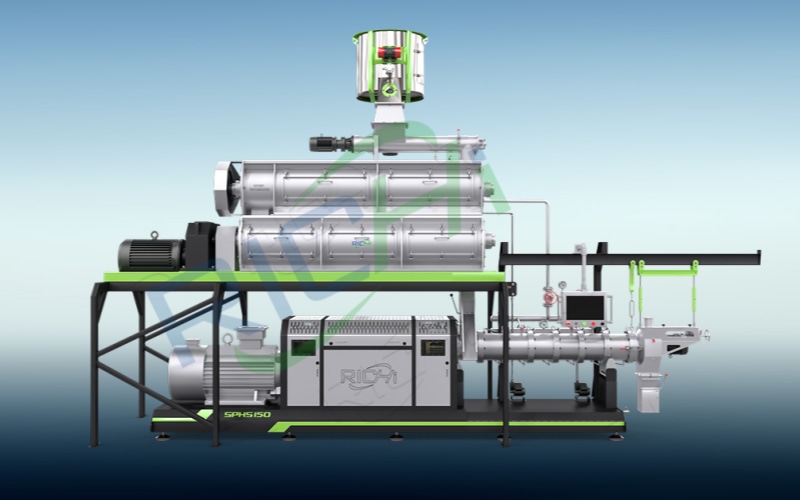
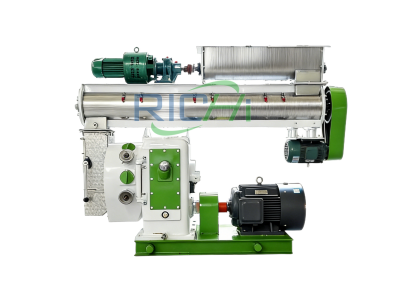
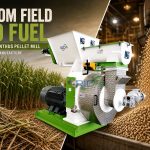
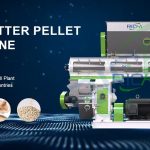
Next, the processed grass enters the pelleting system. A high-performance biomass pellet mill compresses the fibrous material under high pressure, forming dense and uniform pellets. Depending on application requirements, pellet diameter and length can be adjusted to suit different livestock feeding or biomass fuel needs.
After pelletizing, the hot pellets are cooled in a counterflow cooler to enhance hardness and durability. Screening systems remove fines and broken pellets, ensuring consistent product quality. Finally, the finished grass pellets are weighed and packed in bags or stored in bulk silos.
(view: https://pelletisingmachine.com/animal-feed-production-line/)
Technical Advantages of Grass Pellet Production Equipment
A modern grass pellet production line in USA is engineered to handle high-fiber materials efficiently. Wear-resistant ring dies and rollers ensure long service life when processing abrasive grass materials such as alfalfa and switchgrass.
High automation levels allow for precise control of production parameters, including temperature, pressure, and pellet size. An automatic grass pellet production line in USA reduces labor costs while maintaining stable output and consistent pellet quality.
In addition, modular design makes it easy to expand capacity or integrate additional systems such as mixing, coating, or packaging, providing long-term flexibility for growing businesses.
Wide Applications of Grass Pellets
Grass pellets produced by a grass pellet processing line in USA are widely used in animal feed production, particularly for cattle, sheep, horses, and rabbits. Pelleted grass improves feed intake, reduces waste, and ensures uniform nutrition.
Beyond animal feed, grass pellets are also used in biomass energy generation as a renewable fuel source. In this context, a grass biomass pellet production line in USA supports clean energy initiatives and reduces dependence on fossil fuels.
Economic and Environmental Benefits
Investing in grass pellet production equipment in USA offers significant economic advantages. Pelletizing grass increases bulk density, lowers transportation and storage costs, and enhances overall product value.
From an environmental perspective, grass pellet production promotes efficient utilization of renewable resources and supports sustainable agricultural practices. It also contributes to carbon emission reduction when used as a biomass fuel alternative.
Conclusion
With strong agricultural infrastructure and growing demand for sustainable feed and energy solutions, the USA is an ideal market for grass pellet production. A well-designed grass pellet production line in USA enables efficient processing of local grass resources into high-quality pellets for feed and biomass applications. As market demand continues to expand, grass pellet production will remain a valuable and future-oriented investment.